
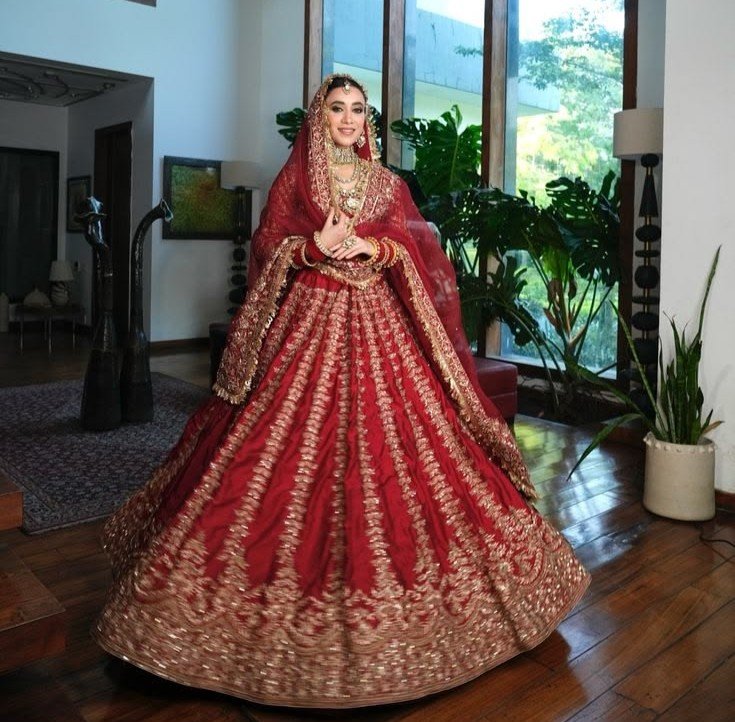
How to choose between the timeless Banarasi saree and the statement bridal lehenga for your wedding
Choosing your bridal outfit is one of the most exciting—and most difficult—decisions of wedding planning.
Should you wear a traditional Banarasi bridal saree that connects you to generations of Indian textile heritage?
Or should you choose a Banarasi bridal lehenga with a dramatic silhouette, statement blouse and beautifully styled dupatta?
There is no universal right answer.
For weddings in 2026–27, bridal fashion is increasingly moving beyond a simple traditional-versus-modern choice. Current bridal coverage shows a wider range of personal styles, bespoke silhouettes, textile-led wardrobes, richer colours, heirloom pieces and outfits selected around how they move, photograph and feel on the bride.
That makes this decision more interesting than ever.
In this guide, we compare Banarasi bridal lehengas vs Banarasi bridal sarees across comfort, tradition, styling, photographs, versatility, wedding functions, repeat wear, investment value and long-term appeal.
Banarasi Bridal Saree vs Bridal Lehenga at a Glance
| Feature | Banarasi Bridal Saree | Banarasi Bridal Lehenga |
|---|---|---|
| Overall Look | Timeless, elegant & traditional | Grand, structured & statement-making |
| Drape | Fluid and personalised | Structured and ready-shaped |
| Heritage Feel | Extremely strong | Strong, especially with woven Banarasi textiles |
| Movement | Depends on draping and fabric weight | Depends on skirt construction and weight |
| Styling Flexibility | Very high | High |
| Photography | Graceful & sophisticated | Dramatic & editorial |
| Repeat Wear | Excellent | Good, especially when separates are versatile |
| Best For | Brides who love sarees & traditional drapes | Brides wanting a lehenga silhouette |
| Learning Curve | May require draping assistance | Easier once fitted correctly |
| Heirloom Appeal | Exceptional | Exceptional when craftsmanship is strong |
| Best Personality Match | Classic, elegant, rooted | Regal, fashion-forward, dramatic |
The right choice ultimately depends on your wedding ceremony, personal style, comfort, body movement, climate, jewellery, blouse preference and how much use you want from the outfit after the wedding.
What Makes a Banarasi Bridal Saree Special?
A Banarasi saree is deeply connected with the weaving heritage of Varanasi.
Banaras Brocades and Sarees are a registered Geographical Indication, and official descriptions highlight finely woven textiles, intricate zari ornamentation and distinctive traditional motifs and techniques associated with Banaras.
For a bride, that heritage can add something that goes beyond fashion.
A Banarasi bridal saree can represent:
Tradition + Craftsmanship + Family Heritage + Individual Style
The saree itself becomes the silhouette.
Its border creates the frame.
Its pallu becomes a visual focal point.
Its zari catches the light.
And the way it is draped can completely change its character.
That flexibility is one of the strongest arguments in favour of choosing a saree for your wedding.
What Makes a Banarasi Bridal Lehenga Special?
A Banarasi bridal lehenga offers a very different experience.
Instead of building the silhouette through draping, the skirt already provides the basic shape.
The outfit can include:
Lehenga skirt + blouse/choli + dupatta
or, in more elaborate designs:
Lehenga + blouse + one or more dupattas + belt/jacket/cape
A Banarasi lehenga can combine woven textile traditions with contemporary bridal construction.
This is particularly attractive for brides who want the visual richness of Banarasi craftsmanship while preferring a more structured, fashion-forward silhouette.
Current bridal fashion coverage also points toward more individualised and bespoke bridal dressing, with designers highlighting versatility, sculpted silhouettes and garments that reflect the bride’s own personality rather than simply following a fixed formula.
Bridal Saree or Lehenga: Which Looks More Traditional?
If your idea of bridal beauty is strongly connected to classic Indian dressing, the Banarasi saree usually has the advantage.
A saree immediately communicates:
- Indian textile heritage
- Traditional draping
- Zari craftsmanship
- Regional styling
- Family and cultural continuity
That makes it particularly compelling for a traditional wedding ceremony.
A Banarasi lehenga can absolutely feel traditional, but its silhouette is more contemporary and fashion-oriented.
Choose the Saree if:
Your dream bridal image involves:
silk + zari + pleats + pallu + traditional jewellery
Choose the Lehenga if:
Your dream bridal image involves:
voluminous skirt + statement blouse + dupatta + dramatic silhouette
Which One Feels More Regal?
This depends on what you mean by “regal.”
A heavily woven Banarasi saree with a broad zari border, elaborate pallu and traditional jewellery can look extraordinarily royal.
A grand Banarasi bridal lehenga with a structured skirt, ornate blouse and layered dupatta can create an equally dramatic royal effect.
So the difference is really one of silhouette.
Saree Luxury
Textile-led + drape-led + heritage-led
Lehenga Luxury
Silhouette-led + styling-led + statement-led
Neither is inherently more luxurious.
The quality of the fabric, weaving, zari, design and construction matters much more than whether the outfit is technically a saree or lehenga.
Which Is Better for the Wedding Ceremony?
Consider what your ceremony looks like.
If you are having a traditional ceremony with rituals that involve sitting, standing, walking and moving between different spaces, you should think carefully about how your outfit behaves.
A saree offers flexibility because you can adjust the drape.
A lehenga provides a more consistent silhouette but can become difficult if the skirt is extremely heavy.
For a Traditional Main Ceremony
A Banarasi bridal saree is an excellent choice when you want heritage to remain the centre of the look.
For a Grand Reception
A Banarasi bridal lehenga can be ideal when you want a dramatic, highly styled silhouette.
This also creates an opportunity to wear both across different wedding events rather than forcing one outfit to do everything.
Which One Is Easier to Manage?
This is one of the most practical questions brides should ask.
Banarasi Saree
A saree may require:
- Proper pleating
- Drape adjustment
- Pins
- Blouse fitting
- Underskirt support
- Someone to help you drape
But once correctly draped, it can be surprisingly adaptable.
Banarasi Lehenga
A lehenga generally requires less draping work.
You simply wear:
Skirt + blouse + dupatta
However, a very heavy skirt or highly embellished dupatta can still affect comfort and movement.
Winner for Simplicity
Lehenga
Winner for Draping Flexibility
Saree
Which Is Better for Long Wedding Functions?
This is where you should ignore fashion photographs for a moment.
Think about your actual wedding day.
How long will you be wearing the outfit?
Will you sit for hours?
Will you dance?
Will you walk extensively?
Will the wedding be indoors or outdoors?
Will the weather be humid?
Will you be travelling between venues?
These details matter.
Vogue’s recent wedding coverage, for example, has specifically highlighted how brides are increasingly considering how garments move, photograph and feel rather than choosing solely according to traditional fashion rules.
Lightweight Banarasi Saree
Can be more comfortable for extended wear when chosen with the right fabric and zari density.
Heavy Banarasi Lehenga
Can look spectacular but should be tested for movement before the wedding.
Practical Rule
Never choose a bridal outfit based only on how it looks when standing still.
Walk in it.
Sit in it.
Turn around.
Lift your arms.
Take photographs.
Spend at least 20–30 minutes wearing it before finalising.
Which One Is Better for Bridal Photography?
Both can photograph beautifully, but they create different visual stories.
Banarasi Saree Photography
A saree creates beautiful opportunities for:
- Pallu movement
- Traditional portraits
- Close-up zari photographs
- Draped full-length shots
- Jewellery-focused portraits
- Candid family photographs
The flowing pallu can also create beautiful movement in photographs.
Banarasi Lehenga Photography
A lehenga creates stronger opportunities for:
- Full-skirt photographs
- Twirl shots
- Detailed blouse portraits
- Dupatta compositions
- Bridal stage photographs
- Editorial-style images
Winner?
Tie—but for different reasons.
Choose saree for grace and heritage.
Choose lehenga for volume and drama.
Which One Is More Comfortable?
There is no automatic winner.
Comfort depends on the actual garment.
A 5-kilogram lehenga can obviously be more tiring than a lighter silk saree.
But a heavily zari-worked Banarasi saree can also become substantial.
Pay attention to:
Fabric weight
Zari density
Embroidery
Lining
Waist construction
Blouse fitting
Dupatta weight
Length
The ideal bridal outfit should feel secure without feeling restrictive.
Which One Is Better for Indian Summer Weddings?
For warm-weather weddings, fabric selection matters enormously.
A heavy bridal outfit can become uncomfortable in heat and humidity.
If your wedding is during a warmer period, consider:
Saree
A lighter Banarasi silk or a less densely worked Banarasi can offer better comfort.
Lehenga
Choose a breathable construction and avoid unnecessarily heavy layers underneath the skirt.
For very warm events, lightweight textiles and controlled embellishment may be more comfortable than maximum embroidery.
What About Winter Weddings?
Winter gives you more flexibility.
A richer silk Banarasi saree can work beautifully.
A heavily woven Banarasi lehenga can also be much easier to wear comfortably.
This is a great time to consider:
Katan Silk
Rich Banarasi Brocade
Velvet blouse details
Layered dupattas
Structured jackets
The heavier visual language feels naturally appropriate for winter weddings.
Banarasi Saree vs Lehenga: Which Is More Versatile After the Wedding?
This is an important investment question.
A bridal outfit should ideally not become a garment you never wear again.
Saree
A good Banarasi saree can be worn later for:
- Festivals
- Family weddings
- Anniversaries
- Puja
- Receptions
- Formal events
You can completely change the look with a new blouse.
That makes the saree exceptionally versatile.
Lehenga
A lehenga can also be reused.
The skirt can be paired with a different blouse.
The blouse can be worn with another saree.
The dupatta can be styled with suits or other lehengas.
Current bridal fashion is increasingly interested in pieces that can move beyond a single wedding event, with Vogue also highlighting brides transforming heirloom sarees into new silhouettes and occasionwear.
Winner for Easy Repeat Wear
Banarasi Saree
Winner for Modular Styling
Banarasi Lehenga
Which Has Better Heirloom Potential?
This is a difficult category because both can become heirlooms.
But a traditional Banarasi saree has one major advantage:
It is already designed as a long-term textile heirloom.
A saree can be carefully stored, worn at significant family occasions and eventually passed to another generation.
An especially meaningful example is the growing interest in heirloom textiles. Vogue reported in 2026 on brides transforming family saris into new wedding garments, showing how inherited textiles are increasingly being integrated into contemporary bridal wardrobes.
A bridal lehenga can certainly become an heirloom, especially when its separate pieces remain wearable.
But the saree has a particularly strong cultural history as a passed-down garment.
Which One Gives You More Styling Options?
Saree
You can change:
- Blouse
- Draping style
- Jewellery
- Hairstyle
- Belt
- Dupatta
- Footwear
The same saree can look completely different with a different blouse and drape.
Lehenga
You can change:
- Blouse
- Dupatta
- Belt
- Jewellery
- Jacket
- Skirt styling
A modular lehenga can therefore be very versatile.
The Winner
Saree for drape flexibility.
Lehenga for mix-and-match separates.
What About a Banarasi Saree with a Lehenga?
Here is an option many modern brides overlook:
You don’t necessarily have to choose one.
You can wear:
Main Wedding
Banarasi bridal saree
Reception
Banarasi bridal lehenga
Or:
Engagement
Banarasi lehenga
Wedding
Traditional Banarasi saree
This approach allows you to express two different sides of your bridal style.
Current bridal fashion increasingly embraces multiple bridal personalities rather than one fixed template, from traditional sarees to statement lehengas and textile-led wardrobes.
Could You Turn a Banarasi Saree into a Lehenga Later?
Yes, depending on the saree, fabric, weaving and construction, a saree can sometimes be repurposed into a lehenga or another garment.
But do not cut a valuable handwoven heirloom without careful planning.
A rare or particularly valuable Banarasi saree may be more meaningful in its original form.
If you are considering conversion, first have the textile assessed by an experienced professional who understands silk and Banarasi weaving.
How to Choose Your Bridal Banarasi Fabric
The silhouette is only half the decision.
The fabric matters too.
Katan Silk
A strong choice for a traditional, rich and structured bridal appearance.
Khaddi Georgette
Useful when you want something lighter and more fluid.
Banarasi Brocade
Ideal when elaborate woven ornamentation is the priority.
Organza-Based Banarasi
Can create a lighter, more structured and somewhat sheer aesthetic, depending on construction.
Muga/Munga-Based Silk
An interesting choice for brides seeking a distinctive silk character; check the exact composition and weaving details because Muga is a specific silk tradition associated with Assam rather than simply a synonym for Banarasi silk.
The most important rule:
Choose the fabric according to the outfit’s weight, construction and your wedding conditions—not just the product name.
How to Choose Your Bridal Colour for 2026–27
Red remains an iconic bridal colour.
But modern bridal wardrobes have become much broader.
Current bridal coverage highlights brides choosing deeper colours, ivory and neutral palettes, textile-led dressing and personalised colour stories rather than treating one shade as mandatory.
For a Banarasi bridal saree, consider:
Classic Red
For an unmistakably traditional bridal look.
Deep Maroon
Elegant and sophisticated.
Rani Pink / Magenta
Festive and vibrant.
Emerald Green
Rich and regal.
Royal Blue
Distinctive and dramatic.
Wine
Modern but luxurious.
Ivory / Gold
Elegant for brides who want understated sophistication.
Dual-Tone or Contrast Sarees
Excellent for brides who want a more individual look.
The right colour is not necessarily the trendiest colour.
It is the colour that photographs beautifully, suits your skin tone and still feels meaningful years later.
How to Choose the Right Banarasi Bridal Saree
Look for:
Good fabric quality
Clearly described composition
Well-finished zari
A balanced border-to-body proportion
A pallu you genuinely love
A blouse that complements the saree
Weight you can comfortably carry
A reputable seller
For premium silk purchases, certification can also matter. The Silk Mark Organisation of India states that the Silk Mark label is used for 100% pure silk products by authorised users, while also clarifying that Silk Mark does not certify zari purity or quality.
How to Choose the Right Banarasi Bridal Lehenga
For a lehenga, look beyond the embroidery.
Check:
Skirt Structure
Does it move comfortably?
Waistband
Does it remain secure when you sit and walk?
Blouse
Can you breathe, sit and raise your arms comfortably?
Dupatta
Is it too heavy?
Lining
Does it feel comfortable against the skin?
Hem
Will it drag?
Weight
Can you comfortably wear it for several hours?
Repeat Wear
Can you separate and restyle the pieces later?
A beautiful bridal outfit should not become a burden after the first 30 minutes.
Banarasi Bridal Saree vs Lehenga for Different Wedding Functions
| Wedding Function | Better Choice |
|---|---|
| Engagement | Banarasi Lehenga |
| Mehendi | Lighter Banarasi Lehenga / Saree |
| Haldi | Lightweight festive outfit |
| Sangeet | Banarasi Lehenga |
| Main Wedding Ceremony | Banarasi Bridal Saree |
| Reception | Banarasi Lehenga or Saree |
| Post-Wedding Puja | Banarasi Saree |
| Family Celebration | Banarasi Saree |
| Anniversary / Future Events | Banarasi Saree |
This isn’t a rulebook.
It is simply a practical starting point.
Which One Should You Choose Based on Your Personality?
Choose a Banarasi Bridal Saree If You Are:
Traditional
You love classic Indian dressing.
Textile-focused
You care deeply about weaving, silk and zari.
Minimalist
You prefer the saree to speak instead of adding layers.
Heirloom-minded
You want something your family can preserve.
A saree lover
You already know you feel confident in a saree.
Choose a Banarasi Bridal Lehenga If You Are:
Statement-driven
You want a dramatic silhouette.
Contemporary
You prefer structured fashion.
Photography-focused
You love the impact of a full skirt and layered dupatta.
Experimenting
You want more freedom with blouse, jacket and dupatta combinations.
Comfortable with modern bridal styling
You want tradition interpreted through a contemporary shape.
7 Questions to Ask Before Buying Your Bridal Outfit
Before paying for a bridal Banarasi saree or lehenga, ask yourself:
1. Can I wear this comfortably for 6–8 hours?
2. Can I sit comfortably in it?
3. Can I walk without assistance?
4. Does the outfit photograph well from multiple angles?
5. Is the fabric and construction clearly explained?
6. Can I realistically wear it again?
7. Do I love it—or am I buying it because everyone else is wearing something similar?
That final question may be the most important.
The 2026–27 Bridal Rule: Personal Style Wins
One clear direction in current bridal fashion is a move toward individuality.
Rather than every bride following the same formula, contemporary bridal dressing is becoming more personal, with designers and bridal commentators emphasising clothes that reflect the wearer’s identity, movement, photography needs and relationship to tradition.
That means your wedding outfit does not have to satisfy anyone else’s definition of a “proper bride.”
You can wear a red Banarasi saree.
You can wear an ivory lehenga.
You can wear a magenta silk saree.
You can combine an heirloom textile with a modern blouse.
You can wear a saree for the pheras and a lehenga for the reception.
The best bridal outfit is the one that feels like you.
Our Verdict: Banarasi Bridal Saree or Bridal Lehenga?
There is no single winner.
Choose the Banarasi Bridal Saree for:
Heritage
Timelessness
Drape versatility
Heirloom potential
Repeat wear
Traditional elegance
Choose the Banarasi Bridal Lehenga for:
Drama
Structured styling
Contemporary bridal fashion
Statement photography
Separate-piece versatility
Modern silhouettes
And for brides who genuinely cannot decide?
Wear both.
Let the saree carry the heritage of your wedding ceremony.
Let the lehenga bring drama to the reception.
There is no reason your bridal wardrobe has to tell only one story.
Final Thoughts
A wedding outfit should do more than make you look beautiful.
It should make you feel comfortable enough to live the day.
You will sit.
You will walk.
You will laugh.
You will greet relatives.
You will pose for photographs.
You may dance.
And years later, you may look back at those photographs and remember exactly how you felt.
So don’t choose between a Banarasi bridal saree and a Banarasi bridal lehenga simply because one is more fashionable.
Choose based on:
Your ceremony + your comfort + your personal style + your textile preference + your future use
A Banarasi saree offers the beauty of a timeless drape.
A Banarasi lehenga offers the drama of a modern bridal silhouette.
Both can be extraordinary.
But the most beautiful bridal outfit is always the one that feels unmistakably yours.
The Banarasi Style
Timeless Elegance Woven in Varanasi.
Frequently Asked Questions
Is a Banarasi saree good for bridal wear?
Yes. A richly woven Banarasi silk saree can be an exceptional bridal choice, particularly for brides who value traditional Indian textile heritage, zari and classic draping.
Is a Banarasi lehenga good for a wedding?
Yes. A Banarasi lehenga can combine the heritage character of Banarasi textiles with a structured, contemporary bridal silhouette.
Which is more comfortable, a bridal saree or lehenga?
Neither is automatically more comfortable. Comfort depends on fabric weight, zari or embroidery density, construction, fitting and the length of time you will wear the outfit.
Which is better for a traditional Indian wedding?
A Banarasi bridal saree is often the stronger choice when you want a traditional, textile-led bridal look. A Banarasi lehenga can also be traditional while offering a more contemporary silhouette.
Which one is better for a reception?
Both can work. A Banarasi lehenga can create a dramatic reception look, while a Banarasi saree offers timeless elegance and can be styled in a more contemporary way.
Can I wear a Banarasi saree after my wedding?
Absolutely. This is one of its biggest advantages. A Banarasi saree can be restyled with different blouses and jewellery for festivals, anniversaries, family weddings and formal occasions.
Can a Banarasi saree be converted into a lehenga?
Depending on the fabric and construction, it may be possible, but valuable handwoven or heirloom sarees should not be cut without professional assessment.
Is red necessary for a Banarasi bridal saree?
No. Red remains a timeless bridal colour, but contemporary brides are increasingly choosing personalised palettes including magenta, pink, green, ivory, wine and other shades.
How can I check whether a silk Banarasi saree is pure silk?
Look for reliable documentation and, where applicable, Silk Mark certification. The Silk Mark Organisation of India states that its label is used for 100% pure silk products by authorised users.