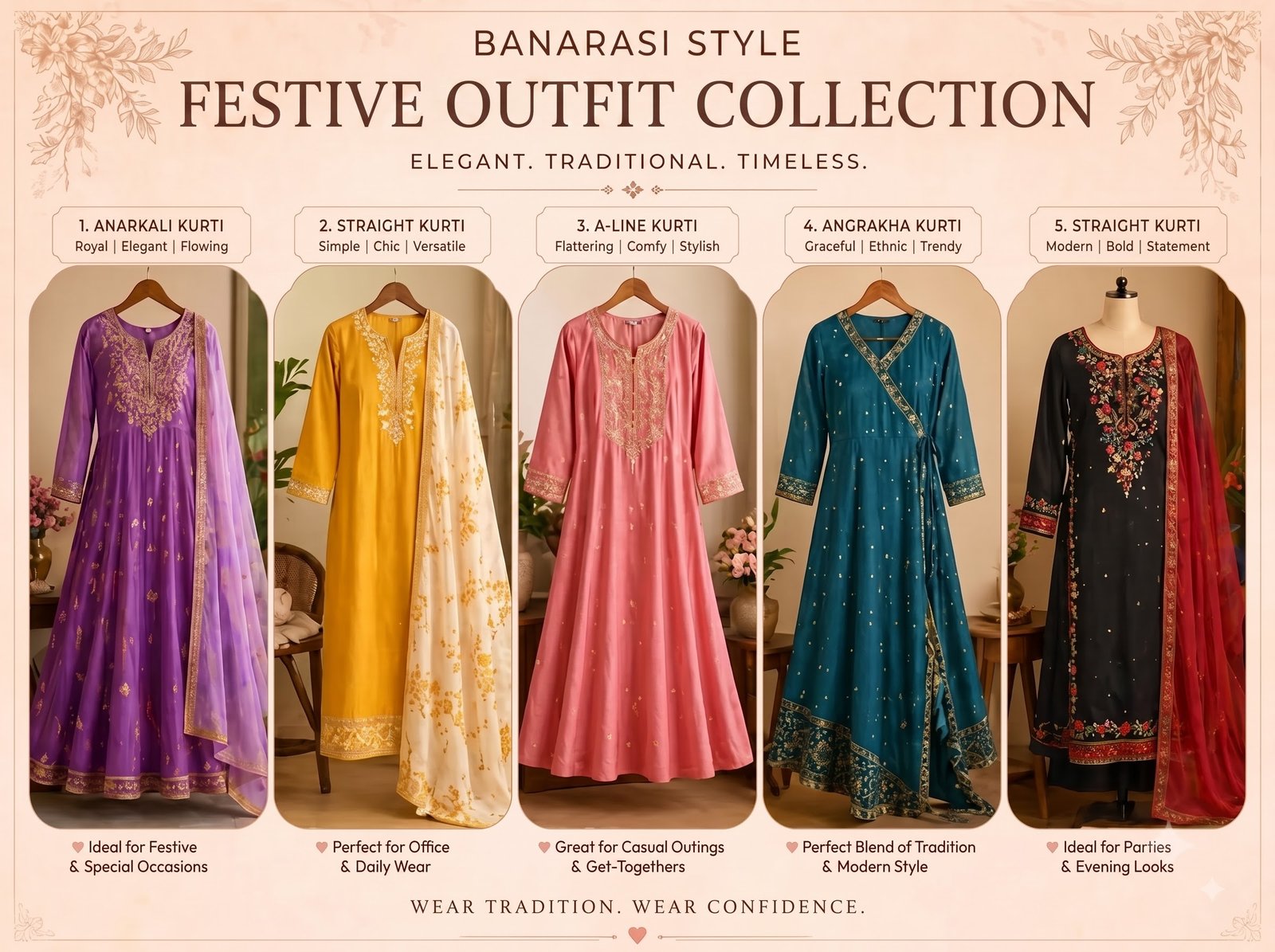
Loading..

GET 10% OFF BY USING CODE TBS10

Festive Colour Guide: What to Wear for Janmashtami, Onam and Ganesh Chaturthi

A complete Indian festive-wear colour guide for Janmashtami, Onam and Ganesh Chaturthi

Festivals give us the perfect reason to dress beautifully.

But festive dressing is not only about choosing the latest trend. In India, colour often carries a cultural mood—devotion, prosperity, celebration, purity, joy or regional identity.

And that makes choosing the right festive colour a little more interesting.

For Janmashtami, shades inspired by Krishna’s traditional visual imagery make yellow and blue natural choices.

For Onam, the classic white-and-gold aesthetic of Kerala offers an entirely different kind of elegance.

For Ganesh Chaturthi, bright yellow, orange, red and green create a joyful festive palette, particularly in the context of Maharashtrian celebrations.

The dates also make this particular festive season interesting. In 2026, Thiruvonam falls on August 26, Ganesh Chaturthi falls on September 14, and Krishna Janmashtami is observed on September 4 in the cited Indian panchang calculations. Festival observance can vary by location and tradition, so local calendars should be checked for puja timings.

So, what should you wear?

Let’s explore the colours, fabrics, sarees, suits and styling ideas that work beautifully for each festival.


Why Colour Matters in Festive Indian Dressing

Colour can change the entire personality of an outfit.

A yellow Banarasi saree feels completely different from a deep blue Katan saree.

A white-and-gold Kerala-inspired look feels different from a vibrant orange festive suit.

The best festive outfits usually balance three things:

Cultural context + personal style + comfort

You don’t need to wear a specific colour simply because someone says it is “the festival colour.”

Instead, understand the visual language of the festival and then choose a shade that suits you.


Janmashtami Colour Guide

The Traditional Janmashtami Palette: Yellow and Blue

For Janmashtami, yellow and blue are among the most recognisable colours associated with Krishna-inspired festive dressing.

This connection comes from traditional iconography in which Krishna is commonly depicted wearing yellow garments, while blue is associated with his characteristic depiction.

Current 2026 fashion and festive-wear guides continue to identify yellow and blue as the most recognisable Janmashtami colours.

For a more traditional look, yellow generally makes the strongest statement.

For something more dramatic, deep blue or peacock blue can be stunning.

And combining the two creates an unmistakably festive palette.


1. Yellow Banarasi Saree for Janmashtami

Yellow is an easy way to bring the spirit of Janmashtami into your outfit.

You don’t need an extremely bright yellow.

Consider:

Mustard

Marigold

Turmeric yellow

Saffron-leaning yellow

Soft pastel yellow

A yellow Banarasi saree with gold zari can create a beautifully traditional look.

Style It With

  • Gold jhumkas
  • Small bindi
  • Traditional bangles
  • Low bun
  • Fresh flowers

Best For

Temple visits, family puja and traditional Janmashtami celebrations.


2. Peacock Blue Banarasi Saree

Want a more dramatic Janmashtami look?

Choose peacock blue, royal blue or deep Krishna-inspired blue.

A blue Banarasi saree with gold zari can look particularly beautiful for an evening celebration.

Style Combination

Blue Banarasi + antique gold jewellery + traditional blouse

For a softer effect, choose:

Powder blue + muted gold


3. Yellow and Blue Combination

You don’t have to choose one.

Try:

Yellow saree + blue blouse

or

Blue saree + yellow dupatta

or

Yellow kurta + blue Banarasi dupatta

This creates a festive colour story while allowing you to experiment with different shades.


4. Janmashtami Suit Idea

Not everyone wants to wear a saree.

A yellow or blue 3-piece suit is a beautiful alternative.

Try:

Yellow kurta + straight pants + blue Banarasi dupatta

This works especially well for family celebrations where you want something traditional but easy to move in.


5. Janmashtami Minimal Look

For a subtle festive outfit, choose:

Cream kurta + yellow Banarasi dupatta

or

Off-white suit + blue dupatta

This is a great option when you prefer understated Indian fashion.


What Fabric Should You Wear for Janmashtami?

Your fabric should match the activity.

For a home puja:

Silk, cotton-silk or elegant Banarasi

can work beautifully.

For a long daytime celebration:

Lightweight fabrics can be more comfortable.

For crowded outdoor events such as Dahi Handi celebrations, a practical outfit is more important than an elaborate silk look. Current festive-wear guides also distinguish between temple/puja dressing and more physically active Dahi Handi environments.


Onam Colour Guide

Onam has a completely different visual language.

Kerala’s most recognisable festive aesthetic is the combination of:

White / Ivory + Gold

This is particularly associated with Kerala’s traditional kasavu textiles and festive attire.

Kerala Tourism describes Onam as a ten-day festival beginning with the Atham star and highlights the importance of Pookkalam, Onasadya, cultural performances and families dressing in their finest new clothes.

In 2026, Thiruvonam is on August 26, according to Kerala Tourism’s official festival calendar.


6. Ivory and Gold: The Classic Onam Look

For an authentic Kerala-inspired festive appearance, ivory, cream or off-white with gold is difficult to beat.

Think:

Ivory saree + gold zari

Cream kurta + gold dupatta

Off-white Banarasi saree + gold blouse

The beauty is in the restraint.

You don’t need ten colours.

You need excellent texture and a well-chosen gold accent.


7. White and Gold Banarasi Saree

Want to bring your Banarasi wardrobe into your Onam celebrations?

Choose a:

Cream / ivory / off-white Banarasi saree with gold zari

The Banarasi texture adds richness while the lighter colour palette creates a clean festive appearance.

Style It With

Gold earrings + simple bangles + traditional hair styling

This works beautifully for:

  • Onam lunch
  • Family gatherings
  • Cultural events
  • Festive photographs

8. Pastel Green for a Modern Onam Look

If pure white feels too traditional for your personal style, introduce a soft colour.

Try:

Pista

Sage

Mint

Soft green

with ivory and gold.

The result still feels festive without losing the elegant character of an Onam-inspired palette.


9. Floral-Inspired Onam Styling

Onam is closely associated with Pookkalam, the colourful floral carpet arrangements made during the festival.

That makes floral colour accents a natural styling choice.

Try:

Ivory saree + floral blouse

or

Cream outfit + colourful Banarasi dupatta

The base remains subtle while the accessories or accent piece bring colour.


What Should You Wear for an Onam Celebration?

The best outfit depends on where you are celebrating.

Traditional Onam Celebration

White/ivory + gold saree

Office Onam Celebration

Cream kurta + festive dupatta

Family Onam Lunch

Light saree + gold jewellery

Cultural Event

Elegant traditional saree + minimal styling

The goal is sophistication rather than excessive embellishment.


Ganesh Chaturthi Colour Guide

Ganesh Chaturthi brings yet another visual language.

Across contemporary festive-wear and Maharashtra-focused styling guides, yellow, orange, red and green are commonly used to create an auspicious and celebratory palette. Yellow and orange connect strongly with marigold and festive ritual imagery, while red and green are also commonly incorporated into festive dressing.

In 2026, Ganesh Chaturthi falls on Monday, September 14 in the cited panchang calculations.


10. Yellow Banarasi Saree for Ganesh Chaturthi

Yellow is one of the easiest colours for a Ganesh Chaturthi outfit.

A bright yellow Banarasi can feel:

Joyful + Traditional + Festive

For a sophisticated version, choose:

Mustard yellow + antique gold

rather than an extremely neon yellow.

Style With

Gold jhumkas + bangles + traditional sandals


11. Orange and Saffron for a Bold Festive Look

Orange creates instant festive energy.

Try:

Saffron

Marigold orange

Burnt orange

Terracotta

These shades pair beautifully with gold zari.

For an evening celebration, deeper orange can look especially elegant.


12. Red Banarasi Saree for Ganesh Chaturthi

Red works beautifully when you want a more traditional and celebratory outfit.

Try:

Red Banarasi saree + gold zari + classic blouse

You can keep your jewellery relatively understated if the saree itself is heavily woven.


13. Green for a Fresh Ganesh Chaturthi Look

Green provides a fresh alternative to yellow and red.

Try:

Parrot green

Emerald

Mehendi green

Pista

For a sophisticated look, emerald green with gold zari is particularly striking.

Contemporary Ganesh Chaturthi styling guides also identify green as an appropriate festive shade, with associations to the green elements used in puja.


14. Banarasi Dupatta + Simple Kurta for Ganesh Chaturthi

You don’t need a saree.

A bright Banarasi dupatta can transform a simple outfit.

Try:

Cream kurta + orange Banarasi dupatta

Yellow kurta + green Banarasi dupatta

Green kurta + red Banarasi dupatta

This is particularly useful for women who prefer comfortable festive dressing.


15. Maharashtrian-Inspired Festive Look

Ganesh Chaturthi has particularly strong visual associations with Maharashtra.

For a regional-inspired look, you can consider:

Traditional saree draping + gold jewellery + classic festive colours

A Nauvari-inspired or Maharashtrian styling direction can work beautifully for cultural celebrations, but regional drapes should be worn respectfully and ideally learned from reliable sources rather than treated as a costume.

For someone who simply wants the colour language of the festival, a regular Banarasi saree in yellow, orange, red or green can achieve the festive effect without recreating a specific regional costume.


The Three-Festival Colour Guide

FestivalSignature Colour DirectionBest Banarasi Choice
JanmashtamiYellow + BlueYellow/blue Banarasi saree or suit
OnamIvory/White + GoldIvory Banarasi or elegant cream-gold outfit
Ganesh ChaturthiYellow + Orange + Red + GreenVibrant Banarasi saree or festive suit

The palettes above describe common festive styling conventions, not mandatory dress codes.


How to Choose Your Colour According to Skin Tone

Festival dressing should still feel personal.

Warm Undertones

Try:

Mustard + gold

Marigold

Orange

Red

Olive

Warm green


Cool Undertones

Try:

Royal blue

Peacock blue

Magenta

Lavender

Cool pink

Emerald


Neutral Undertones

You have more flexibility.

Experiment with:

Yellow + gold

Pink

Green

Blue

Ivory

Red

The best test is always natural light.


How to Match Your Blouse With the Festival Colour

You don’t have to make the blouse exactly the same colour as the saree.

Monochrome

Yellow saree + yellow blouse

Contrast

Yellow saree + blue blouse

Metallic

Green saree + gold blouse

Neutral

Orange saree + ivory blouse

Tone-on-Tone

Pink saree + darker pink blouse

Contrast can make a traditional outfit feel much more contemporary.


Banarasi Saree or Suit: What Should You Wear?

Choose a Saree When:

You want a traditional appearance.

You enjoy dressing up.

You want statement family photographs.

You are attending a puja or formal gathering.

Choose a Suit When:

You want maximum movement.

You have a long day of celebrations.

You prefer an easy silhouette.

You are not comfortable managing a saree.

A beautifully woven Banarasi dupatta can provide the traditional touch even when the rest of the outfit is simple.


How to Make Festive Dressing Look Expensive

You don’t need the heaviest outfit.

Focus on:

Good fabric

Controlled colour palette

Quality zari

Well-fitted blouse or kurta

Balanced jewellery

Clean draping

The difference between “festive” and “overdressed” is often simply balance.


One Statement Piece Is Enough

If your saree has heavy zari:

Keep the blouse relatively simple.

If your blouse is heavily embellished:

Choose a cleaner saree.

If the dupatta has an elaborate border:

Keep the kurta minimal.

If the jewellery is dramatic:

Don’t add too many additional accessories.

This simple principle works for all three festivals.


Three Ready-to-Wear Outfit Formulas

Janmashtami

Yellow Banarasi saree + blue blouse + gold jhumkas + flowers


Onam

Ivory/gold saree + simple blouse + traditional gold jewellery


Ganesh Chaturthi

Orange or green Banarasi saree + gold zari blouse + festive jewellery

Simple.

Traditional.

Photogenic.


How to Build a Festive Wardrobe That Works Beyond One Festival

The smartest festive wardrobe doesn’t contain one outfit for every festival.

Instead, invest in versatile pieces.

For example:

One Ivory Banarasi Dupatta

Can work for:

Onam + Diwali + Puja + family functions

One Yellow Banarasi Saree

Can work for:

Janmashtami + Raksha Bandhan + Haldi + festive lunches

One Emerald or Green Banarasi Saree

Can work for:

Ganesh Chaturthi + Diwali + weddings + receptions

One Rich Magenta Saree

Can work across:

Festivals + weddings + family events

This gives you much more value from your wardrobe.


The Banarasi Advantage

Banarasi textiles naturally lend themselves to festive dressing because the combination of:

silk + texture + zari + traditional motifs

already creates a sense of occasion.

That means you don’t need extreme embellishment.

A well-chosen Banarasi saree can make a beautifully polished festive outfit with comparatively simple accessories.

And the same principle applies to Banarasi dupattas and festive suit fabrics.


A Note About “Festival Colours”

It’s worth remembering that there is rarely one universally mandated clothing colour for an Indian festival.

Regional traditions, family customs, temples and individual beliefs can differ.

For example, current Janmashtami fashion guides often emphasise yellow and blue, while Onam’s most iconic Kerala visual language centres on white, cream and gold. Ganesh Chaturthi styling commonly uses yellow, orange, red and green, particularly in Maharashtra.

Treat these palettes as styling inspiration, not strict religious rules.

Your comfort and personal style still matter.


Festival Dates for 2026

For readers planning their festive wardrobe, these are useful reference dates:

Thiruvonam / Onam

Wednesday, August 26, 2026 according to Kerala Tourism’s official festival calendar.

Krishna Janmashtami

Friday, September 4, 2026 in the cited panchang calculations for North Indian locations.

Ganesh Chaturthi

Monday, September 14, 2026 in the cited panchang calculations.

Festival dates and observance can vary by region and local tradition, particularly for religious timings, so confirm the local calendar when planning temple visits or puja.


Final Thoughts

Festive fashion doesn’t need to be complicated.

Sometimes one colour says everything.

Yellow and blue for Janmashtami.

Ivory and gold for Onam.

Yellow, orange, red and green for Ganesh Chaturthi.

But don’t think of these as strict rules.

Think of them as starting points.

Choose a Banarasi saree in a colour that makes you feel beautiful.

Choose a Banarasi dupatta when you want something easier.

Choose a 3-piece suit when comfort matters.

And choose jewellery that complements rather than competes.

Because the best festive outfit is not the one with the most decoration.

It is the one that feels perfectly right for the celebration.

The Banarasi Style

Timeless Elegance Woven in Varanasi.


Frequently Asked Questions

What colour should I wear for Janmashtami?

Yellow and blue are widely used in Janmashtami-inspired dressing because of their connection with traditional Krishna imagery. Yellow is particularly popular for devotional and festive looks.

What colour is traditionally worn for Onam?

The most recognisable Kerala festive palette is white or ivory with gold, strongly associated with traditional kasavu textiles. Kerala Tourism describes Onam as a major cultural festival where families dress in new clothes and celebrate with traditional food and cultural activities.

What colours are popular for Ganesh Chaturthi?

Yellow, orange, red and green are widely used for festive Ganesh Chaturthi dressing, particularly in Maharashtra-focused styling.

Can I wear a Banarasi saree for Onam?

Yes. An ivory, cream or gold-accented Banarasi saree can create an elegant festive look while incorporating Banarasi craftsmanship into an Onam-inspired palette.

Can I wear a Banarasi suit instead of a saree?

Absolutely. A Banarasi dupatta paired with a simple kurta and trousers can create a comfortable festive outfit.

Which Banarasi colour is best for Janmashtami?

Yellow and blue are the easiest choices. You can also use cream and gold for a more understated interpretation.

Which Banarasi saree colour is best for Ganesh Chaturthi?

Yellow, orange, red and green all work beautifully. Choose the shade according to your personal style and the type of celebration.

What should I wear for a daytime festival?

Lightweight sarees, cotton-silk outfits, lighter Banarasi fabrics and comfortable 3-piece suits can be practical choices for daytime events.

What should I wear for an evening festive event?

Richer colours such as royal blue, emerald, magenta, deep red and wine can work beautifully with zari and statement jewellery.
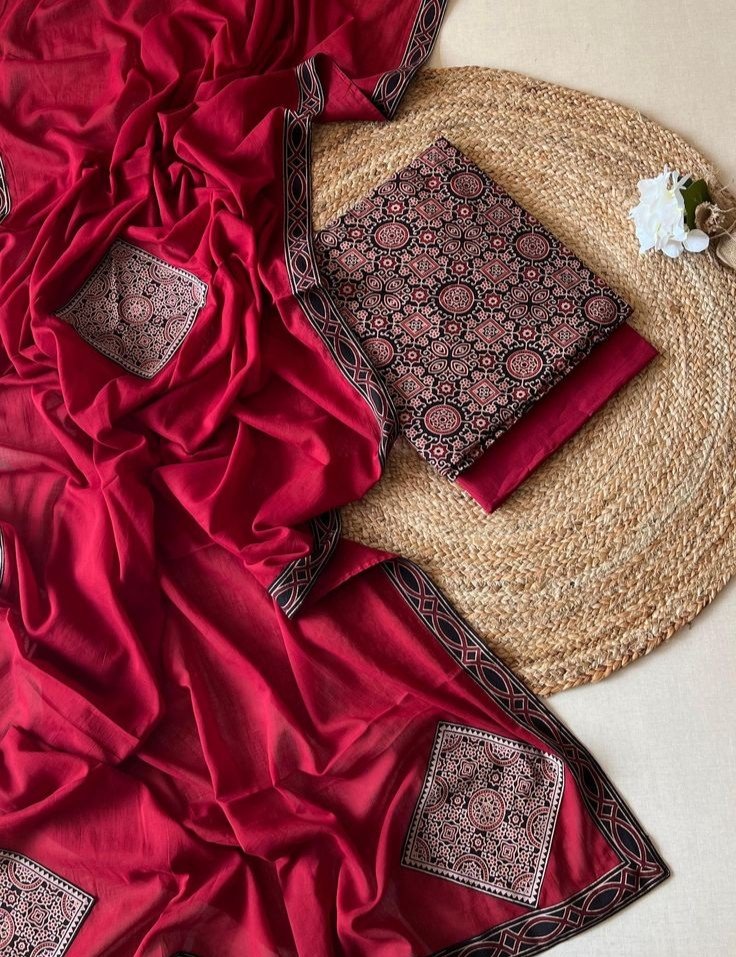
Unstitched Banarasi Dress Material: Fabric Lengths, Stitching Ideas and Costs

A complete buyer’s guide to choosing, measuring, stitching and styling a Banarasi 3-piece dress material

An unstitched Banarasi dress material gives you something a ready-made suit cannot always provide:

the freedom to create the outfit your way.

Instead of buying a fixed-size kurta, trouser and dupatta, you receive coordinated fabric that can be tailored according to your measurements, preferred silhouette and personal style.

That makes an unstitched Banarasi dress material particularly attractive for women who want a custom fit, a specific kurta length, a different sleeve style or a more personalised festive outfit.

A typical 3-piece dress material consists of:

Top/Kurta fabric + Bottom fabric + Dupatta

But the exact fabric lengths can vary by product and seller. Current Indian dress-material listings commonly show combinations such as around 2.5 metres for the top, 2–2.5 metres for the bottom and 2.25–2.5 metres for the dupatta.

So before purchasing one, it is important to understand exactly what you are getting.


What Is an Unstitched Banarasi Dress Material?

An unstitched Banarasi dress material is a coordinated fabric set sold without a finished garment.

Instead of receiving a ready-made suit, you receive fabric that can be taken to a tailor and converted into your desired outfit.

A standard 3-piece set usually contains:

1. Top / Kurta Material

This is the main fabric used to make the kurta, kameez or top.

2. Bottom Material

This can be used for a salwar, churidar, straight pants, cigarette pants, palazzos or other bottom styles.

3. Dupatta

The third piece completes the outfit and may feature matching zari, motifs, borders or a contrasting design.

Current retail examples show 3-piece dress materials with approximately 2.5 m top + 2–2.5 m bottom + 2.25–2.5 m dupatta, although measurements are not universal and should always be checked on the individual product page.


Why Choose Unstitched Banarasi Dress Material?

The biggest advantage is customisation.

A ready-made suit gives you a predetermined:

  • Length
  • Fit
  • Sleeve style
  • Neckline
  • Bottom shape

With unstitched fabric, you can decide how the final outfit will look.

You can create:

Straight Kurta

A-Line Kurta

Anarkali

Long Kurta

Short Kurta

Palazzo Set

Sharara Set

Straight Pants

Churidar

Salwar

This makes an unstitched Banarasi dress material more than just fabric.

It is a starting point for your own outfit.


How Much Fabric Is Usually Included?

This is one of the first things buyers should check.

There is no single universal measurement for every unstitched dress material.

Different fabrics, widths, designs and sellers use different measurements.

For example, current Indian dress-material listings include:

  • Top: around 2.5 m
  • Bottom: around 2–2.5 m
  • Dupatta: around 2.25–2.5 m

A general 2026 fabric guide also gives approximately 2–2.5 m for a standard kameez/top, 2–2.5 m for the bottom and 2.25–2.5 m for a dupatta for common adult suit proportions.

But this should be treated as a general guide, not a guarantee.

Always check the exact measurements listed by the seller.


What Does a 3-Piece Banarasi Dress Material Usually Contain?

ComponentCommon Approximate LengthPurpose
Top / Kurta2–2.5 mKurta / Kameez
Bottom2–2.5 mSalwar / Pants / Palazzo
Dupatta2.25–2.5 mDupatta
TotalAbout 6.5–7.5 mComplete 3-piece outfit

These ranges are commonly seen in current Indian dress-material listings, but the actual quantity depends on the particular product.

Important:

Do not buy based only on “3-piece set.”

A 3-piece label tells you the number of components, not necessarily their exact lengths.


Why Fabric Width Matters

Length is only half of the measurement equation.

Fabric width is equally important.

Two fabrics can both be 2.5 metres long but provide different usable amounts if their widths differ.

This becomes important for:

  • Larger sizes
  • Long kurtas
  • Full sleeves
  • Anarkalis
  • Flared styles
  • Wide palazzos

A tailoring guide using common 44–45 inch fabric widths notes that fabric requirements can increase when the garment is larger, longer or more structured.

So before finalising your design, tell your tailor:

fabric length + fabric width + your measurements + desired garment style


What Size Can a 2.5-Metre Top Make?

This depends on:

  • Your bust measurement
  • Kurta length
  • Sleeve length
  • Fabric width
  • Flare
  • Design
  • Neckline
  • Panel requirements

For many standard straight-cut adult kurtas, around 2–2.5 metres can be sufficient, but a tall customer or someone wanting a very long, flared or full-sleeved design may require more fabric.

That is why never assume the same length works for every design or every body type.


Stitching Idea 1: Straight-Cut Banarasi Kurta

This is one of the easiest and most versatile options.

The silhouette is:

Clean + Elegant + Classic

A straight kurta allows the fabric and Banarasi motifs to remain the centre of attention.

This works particularly well when the top fabric already has:

  • Woven motifs
  • Zari butis
  • A decorative border
  • Rich texture

Style It With

Cigarette pants + matching or contrasting dupatta

Perfect for:

  • Festive lunches
  • Family gatherings
  • Office celebrations
  • Puja
  • Small functions

Stitching Idea 2: A-Line Kurta

Want a little more movement?

Try an A-line silhouette.

It gradually flares from the upper body toward the hem, creating a feminine shape without requiring the amount of fabric used for a heavily flared Anarkali.

Best With

A Banarasi fabric that has a beautiful body or border.

Style Tip

Keep the neckline simple.

Let the flare and woven fabric create the visual interest.


Stitching Idea 3: Long Festive Kurta

A longer kurta can turn a simple dress material into a much more dramatic outfit.

Try:

Long straight kurta + narrow pants + statement dupatta

or

Long A-line kurta + straight bottom + Banarasi dupatta

This is especially useful for women who prefer a more elegant, elongating silhouette.

Best For

Festivals, receptions and evening family functions.


Stitching Idea 4: Anarkali

An Anarkali can create a beautiful occasion-wear look from an unstitched dress material.

However, this is where fabric quantity becomes especially important.

A heavily flared Anarkali can require significantly more fabric than a straight kurta. A general tailoring guide, for example, places a standard adult Anarkali at around 4–6 metres, depending on construction and flare.

Therefore:

Check your fabric quantity before choosing an Anarkali.

A 2.5-metre top piece alone may not be enough for the full flare you have in mind.

Solution

Ask your tailor about using:

  • Additional matching fabric
  • Contrast panels
  • Separate lining
  • Coordinated plain fabric

before cutting the material.


Stitching Idea 5: Peplum-Style Kurta

For a contemporary ethnic look, try a shorter Banarasi peplum-style top with:

Straight pants + statement dupatta

This works particularly well when the fabric has intricate zari or woven motifs.

The shorter silhouette lets the bottom remain relatively clean.

Best For

Festive parties, engagements and contemporary ethnic events.


Stitching Idea 6: Banarasi Palazzo Set

A wide-leg palazzo can create a relaxed but luxurious silhouette.

Pair:

Banarasi Kurta + Plain Palazzo + Rich Dupatta

or

Simple Kurta + Banarasi Palazzo + Statement Dupatta

The choice depends on how elaborate your fabric is.

If the top is heavily decorated, a plain bottom often creates better balance.


Stitching Idea 7: Sharara or Gharara Look

If you are buying a festive Banarasi 3-piece material, you can explore a sharara-inspired silhouette.

However, a standard bottom piece may not always provide enough fabric for a heavily flared sharara.

This depends on:

  • Bottom length
  • Leg width
  • Number of panels
  • Volume
  • Your measurements

So always discuss the desired silhouette with your tailor before cutting.

Best For

Wedding guests, festive celebrations and special occasions.


Stitching Idea 8: Straight Pants + Long Kurta

This is an excellent modern option.

Try:

Long Banarasi kurta + ankle-length straight pants + matching dupatta

The clean bottom creates a contemporary contrast with the traditional texture of the Banarasi fabric.

It is elegant without feeling overly traditional.


Stitching Idea 9: Short Kurta + Palazzo

A shorter kurta can make a Banarasi dress material feel much younger and more contemporary.

Pair it with:

Wide-leg palazzo

and let the dupatta remain the main festive element.

Choose this when you want:

Comfort + movement + contemporary ethnic style


Stitching Idea 10: Jacket-Style Ethnic Outfit

You can also experiment with layering.

For example:

Simple inner kurta + Banarasi jacket + straight pants

This is especially useful if you already have a plain kurta and want to use the Banarasi fabric creatively.

However, creating a jacket from the same 3-piece material depends heavily on the fabric quantity.


How to Decide the Right Stitching Style

Before giving the fabric to your tailor, decide:

Desired Length

Do you want:

Hip length?

Knee length?

Calf length?

Ankle length?

Sleeve

Sleeveless

Short sleeve

Elbow sleeve

Full sleeve

Silhouette

Straight

A-line

Flared

Anarkali

Peplum

Bottom

Churidar

Straight pant

Cigarette pant

Palazzo

Salwar

Sharara

Making these choices before cutting can help reduce fabric wastage.


How Much Does Stitching Cost?

This is one area where buyers should be careful with fixed price claims.

There is no single nationwide stitching price for an unstitched suit.

The final tailoring cost depends on:

  • City
  • Tailor’s experience
  • Garment design
  • Fabric
  • Lining
  • Number of panels
  • Embroidery
  • Piping
  • Neck detailing
  • Sleeve construction
  • Bottom style
  • Dupatta finishing
  • Urgency

A simple straight-cut kurta will generally require less tailoring work than an elaborate Anarkali, sharara or heavily detailed suit.

Therefore, rather than treating one number as a national standard, it is better to ask your local tailor for a quote based on the exact design.

Typical Pricing Structure

A tailor may separately charge for:

Kurta stitching

Bottom stitching

Dupatta finishing

Lining

Extra flare/panels

Neck design

Sleeve detailing

Embroidery or embellishment

So the final cost should be calculated as:

Fabric Cost + Tailoring + Lining + Additional Work + Finishing


A Practical Way to Calculate Your Total Outfit Cost

Suppose your unstitched Banarasi dress material costs:

₹2,500

And your tailor charges:

₹800

For stitching.

Additional lining and finishing cost:

₹300

Then:

Total outfit investment = ₹3,600

This is only an illustration—not a market-wide price benchmark.

Always use your actual fabric price and your tailor’s quote.


Why the Same Dress Material Can Have Different Final Costs

Two people can buy the same fabric but spend completely different amounts on stitching.

Customer A

Straight kurta + simple pants

Lower tailoring complexity.

Customer B

Long A-line kurta + full sleeves + lining + palazzo

Higher complexity.

Customer C

Anarkali + heavy flare + can-can + detailed neck + sleeve work

Much higher complexity.

The fabric is identical.

The finished garment cost is not.


Is Unstitched Dress Material More Economical?

It can be, particularly when you already have a trusted tailor and want custom sizing.

You may be able to avoid the premium associated with a fully finished designer-style garment.

But do not assume:

Unstitched = always cheaper.

A complex custom-stitched outfit can become more expensive than a simple ready-made suit.

The real benefit is control and personalisation.


Unstitched vs Ready-Made Suit

FeatureUnstitched Dress MaterialReady-Made Suit
FitCustomisedFixed size
LengthYour choicePre-determined
SleeveYour choicePre-determined
NecklineCustomFixed
SilhouetteHighly flexibleLimited
Tailoring NeededYesNo
AlterationsUsually easierDepends on garment
PersonalisationHighModerate
ConvenienceLowerHigher

Choose Unstitched If:

You have a trusted tailor.

You know your preferred fit.

You want a specific silhouette.

You enjoy custom clothing.

Choose Ready-Made If:

You need the outfit quickly.

You prefer convenience.

You do not want to arrange tailoring.


What Should You Check Before Buying an Unstitched Banarasi Dress Material?

Don’t look only at the photograph.

Check:

1. Fabric

Is it silk, semi-silk, georgette, brocade or another textile?

2. Exact Length

How many metres are included in the top, bottom and dupatta?

3. Width

What is the usable fabric width?

4. Work

Is the design woven, printed, embroidered or embellished?

5. Dupatta

Does it have a border?

Is it fully decorated?

Is it lightweight?

6. Bottom

Is matching bottom fabric included?

7. Colour

Does the product description accurately specify the colour?

8. Care

Can it be dry-cleaned?

Does the seller provide specific care instructions?

9. Return Policy

This is particularly important for unstitched products.

10. Product Photos

Look for clear close-ups of:

  • Fabric texture
  • Motifs
  • Border
  • Dupatta
  • Reverse side where relevant

Why Fabric Composition Matters

The phrase “Banarasi” tells you about the textile tradition or design association, but it does not automatically tell you that the material is pure silk.

An unstitched Banarasi-style dress material could use different fibre compositions.

So check the product description carefully.

Look for clear wording such as:

Pure Silk

Silk Blend

Viscose

Georgette

Semi Silk

or another specified composition.

For genuine silk products, the Silk Mark Organisation of India states that its Silk Mark label is intended for products made of 100% pure silk by authorised users.


How to Get the Best Fit from an Unstitched Suit

Before cutting the fabric, give your tailor your current measurements.

Do not rely only on your old kurta.

Body measurements can change.

Provide:

  • Bust
  • Waist
  • Hip
  • Shoulder
  • Armhole
  • Sleeve length
  • Kurta length
  • Bottom length

Also explain the intended fit:

Loose

Regular

Semi-fitted

Fitted

The same fabric can look completely different depending on the final measurements.


Leave Enough Margin for Alterations

If possible, discuss seam allowance with your tailor before cutting.

This is especially important if:

  • You are between sizes
  • You plan to lose/gain weight
  • The fabric is expensive
  • You may want to alter the outfit later

A little planning can save a lot of frustration.


Should You Wash the Fabric Before Stitching?

Do not automatically wash every Banarasi dress material before tailoring.

Some fabrics may respond differently to washing or dry cleaning.

Instead:

Check the seller’s care instructions first.

For delicate silk, zari or structured textiles, improper washing can affect:

  • Shrinkage
  • Surface finish
  • Colour
  • Zari
  • Drape

If the product specifically recommends dry cleaning, follow that instruction.


How to Style Your Finished Banarasi Suit

Once stitched, the dupatta becomes the key styling element.

Try:

Traditional

Jhumkas + bangles + bindi + juttis

Contemporary

Statement earrings + heels + minimal jewellery

Festive

Gold jewellery + embroidered footwear

Minimal

Pearl earrings + neutral sandals

Let the Banarasi fabric remain the centre of attention.


Best Colours for a Banarasi Dress Material

The colour can completely change the personality of the outfit.

Magenta

Festive and vibrant.

Red

Traditional and celebratory.

Emerald Green

Rich and sophisticated.

Royal Blue

Elegant and striking.

Mustard Yellow

Perfect for festive daytime occasions.

Peach

Soft and feminine.

Wine

Ideal for evening wear.

Pastel Pink

Modern and youthful.


Banarasi Dress Material for Different Occasions

Wedding Guest

Choose:

Rich zari + elegant long kurta + straight pant

Mehendi

Choose:

Bright colour + lightweight fabric + comfortable palazzo

Raksha Bandhan

Choose:

Pastel or festive Banarasi + simple kurta silhouette

Diwali

Choose:

Rich colour + statement dupatta + festive jewellery

Puja

Choose:

Elegant woven fabric + modest straight-cut silhouette

Office Festive Event

Choose:

Minimal Banarasi detailing + straight pants + lightweight dupatta


How to Make One Dress Material Look Different Twice

The beauty of custom stitching is that you can completely transform the final outfit.

For example:

Look 1

Straight Kurta + Cigarette Pants + Open Dupatta

Look 2

A-Line Kurta + Palazzo + Pleated Dupatta

Same basic material.

Completely different appearance.

You can also change:

Neckline

Sleeves

Bottom

Length

Dupatta drape

Jewellery

and make the outfit feel new.


Is an Unstitched Banarasi Dress Material a Good Gift?

Yes—especially when you know the recipient’s style.

It can be a thoughtful gift because the person receiving it can choose the final design and fit.

However, before gifting, make sure you know:

  • Preferred colours
  • Approximate size
  • Preferred fabric
  • Traditional vs contemporary style
  • Whether the recipient has a trusted tailor

Why Unstitched Banarasi Dress Material Is Worth Considering

Fashion is increasingly moving toward personalisation.

Instead of buying exactly what everyone else is wearing, more women are looking for clothing that fits their body, lifestyle and individual taste.

That is precisely where unstitched dress material shines.

You choose:

the fabric

the fit

the silhouette

the sleeves

the neckline

the bottom

the styling

The fabric gives you the foundation.

You create the final outfit.


Final Thoughts

An unstitched Banarasi dress material is more than a 3-piece fabric set.

It is an opportunity to create something that fits you—not simply something that comes in your size.

Whether you choose a classic straight kurta, a flowing A-line silhouette, a festive palazzo set or a more elaborate custom design, the key is to understand the fabric length before cutting.

Remember the most important buying rule:

Always check the exact top, bottom and dupatta measurements on the product page.

A typical adult 3-piece dress material may contain approximately 2–2.5 metres of top fabric, 2–2.5 metres of bottom fabric and 2.25–2.5 metres of dupatta, but individual products vary.

And remember that stitching cost depends on the design you choose—not simply the amount you paid for the fabric.

The real beauty of an unstitched Banarasi dress material is freedom.

You choose the fabric.
You choose the fit.
You choose the style.
You create the outfit.

The Banarasi Style

Timeless Elegance Woven in Varanasi.


Frequently Asked Questions

What is an unstitched Banarasi dress material?

It is a coordinated set of unstitched fabric, usually including top/kurta material, bottom material and a dupatta, which can be tailored into a customised outfit.

How many metres are in a 3-piece unstitched suit?

There is no universal measurement. Current dress-material listings commonly show approximately 2–2.5 m for the top, 2–2.5 m for the bottom and 2.25–2.5 m for the dupatta.

Is 2.5 metres enough for a long kurta?

It may be enough depending on your size, height, fabric width and design. A very long, wide or flared kurta may require more fabric.

Can I make an Anarkali from an unstitched dress material?

Sometimes, but not every 3-piece set contains enough top fabric for a heavily flared Anarkali. Discuss the required flare and fabric quantity with your tailor before cutting.

How much does it cost to stitch an unstitched suit?

There is no single standard rate across India. Tailoring cost depends on your city, tailor, design complexity, lining, sleeves, neck work, flare and bottom style.

Is an unstitched suit better than a ready-made suit?

It depends on your priority. Unstitched fabric offers significantly more control over fit and design, while ready-made suits are more convenient.

Can I use Banarasi dress material for a palazzo suit?

Yes, provided the bottom fabric has sufficient length and width for the desired palazzo design. Always confirm this with your tailor before cutting.

Does Banarasi mean pure silk?

No. “Banarasi” describes a textile tradition/design association and does not by itself guarantee that a product is made from 100% pure silk. Check the stated fabric composition and certification where applicable.

How can I verify pure silk?

The Silk Mark Organisation of India states that Silk Mark labels are used for products made of 100% pure silk by authorised users.


SEO Settings for Yoast

Focus Keyphrase

unstitched Banarasi dress material

Secondary Keywords

  • Banarasi dress material
  • unstitched Banarasi suit
  • Banarasi 3 piece dress material
  • unstitched suit fabric
  • Banarasi suit material
  • Banarasi dress material price
  • unstitched suit stitching ideas
  • Banarasi dress material fabric length
  • Banarasi suit material online
  • 3 piece unstitched dress material
  • Banarasi kurta material
  • Banarasi dress material for wedding

Long-Tail Keywords

  • unstitched Banarasi dress material fabric length
  • how many metres in Banarasi dress material
  • Banarasi 3 piece suit material length
  • unstitched Banarasi suit stitching ideas
  • how to stitch Banarasi dress material
  • unstitched Banarasi dress material price
  • best Banarasi dress material for wedding
  • how to choose unstitched dress material
  • 2.5 metre Banarasi dress material
  • Banarasi dress material with dupatta