Loading..

GET 10% OFF BY USING CODE TBS10

Garba and Dandiya in a Banarasi: Drapes That Survive Nine Nights of Dancing

How to wear a Banarasi saree for Navratri without sacrificing comfort, movement or traditional elegance

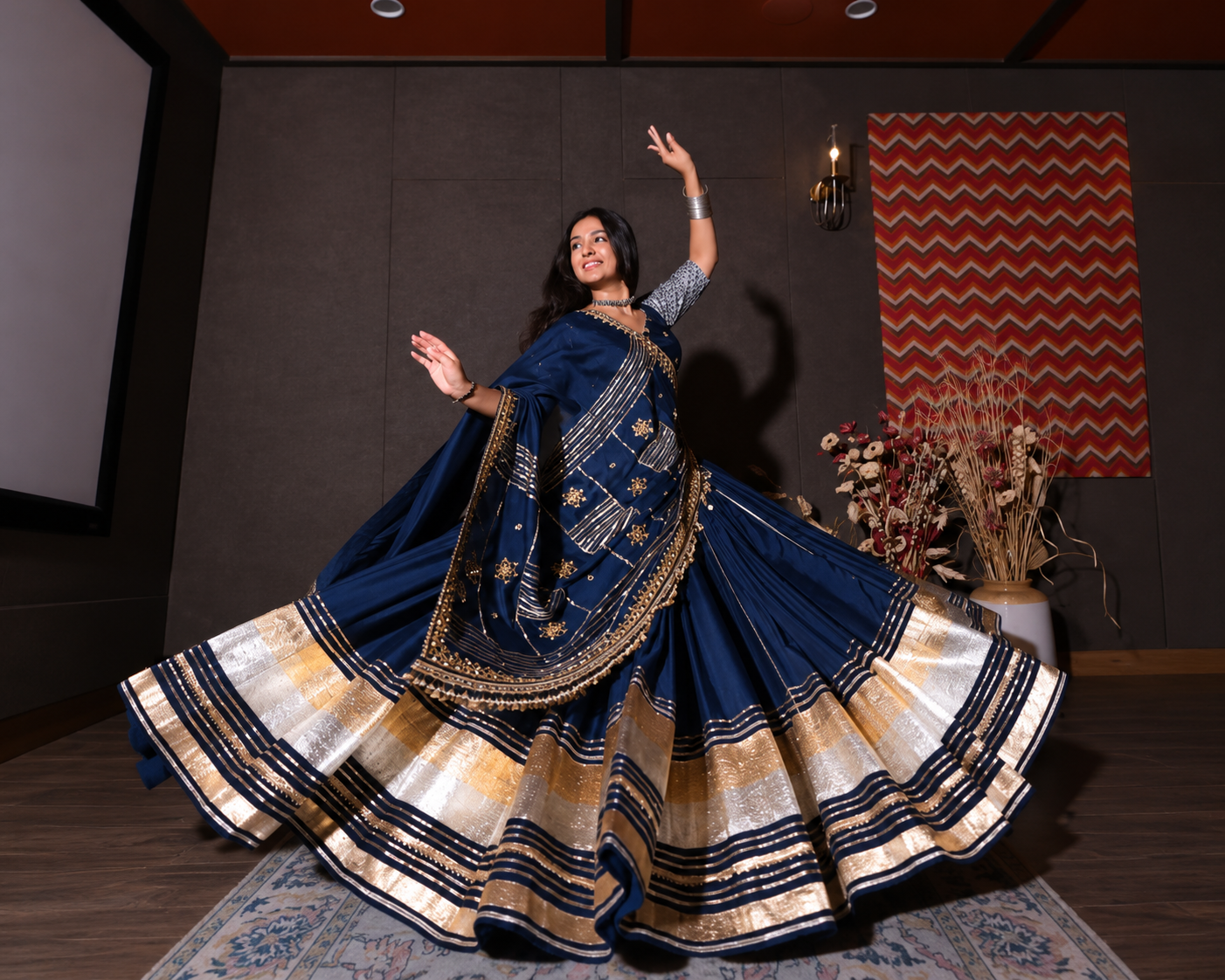
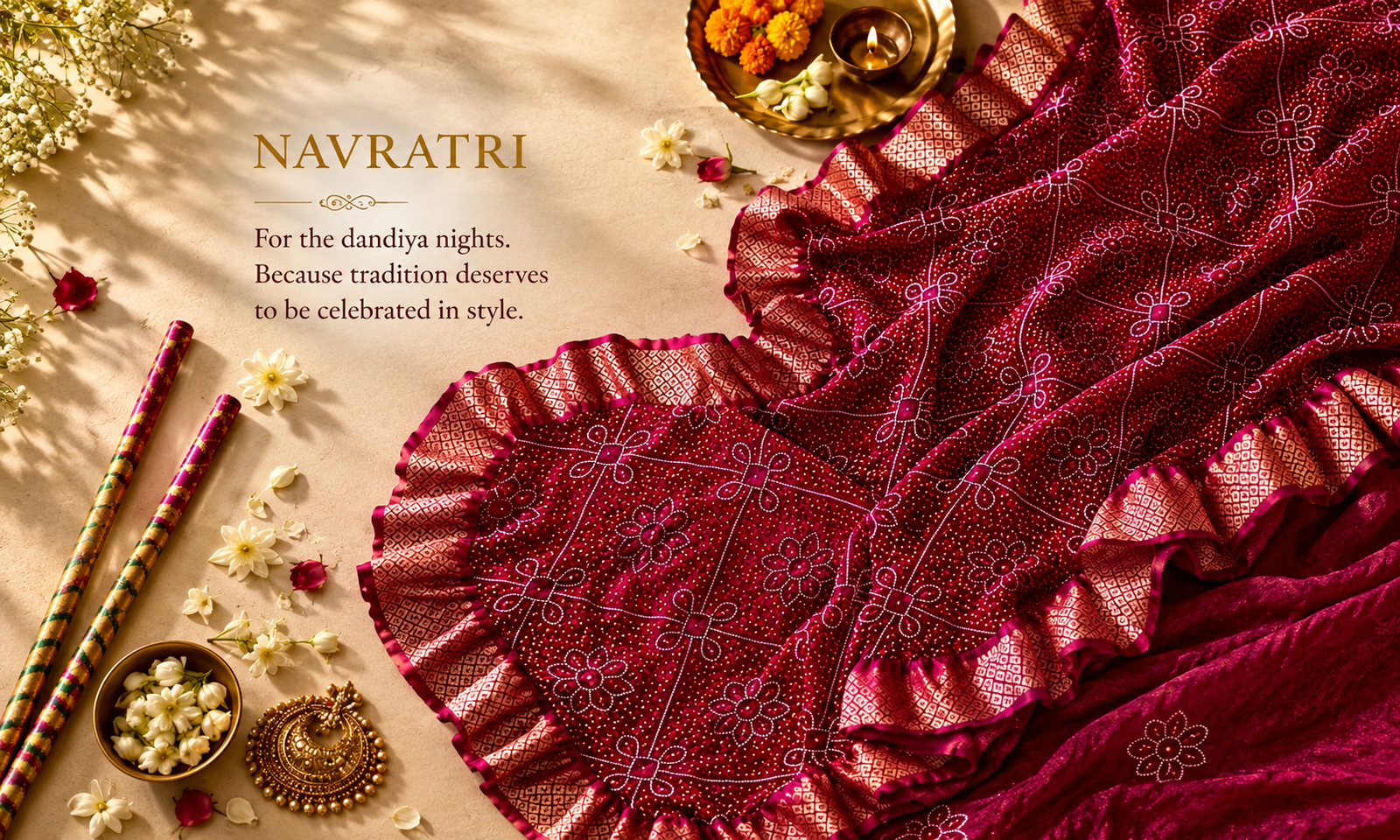
Nine nights of Garba and Dandiya mean colourful outfits, traditional music, energetic dancing and countless festive photographs. And while lehengas and chaniya cholis are popular choices, you don’t have to leave your love for Banarasi textiles at home.

A beautifully styled Banarasi saree can create a distinctive Garba look, combining the richness of traditional Indian weaving with the energy of Navratri fashion.

But there is one important consideration.

A saree that looks stunning when you stand still may become difficult to manage when you are spinning, dancing in a circle or playing Dandiya for several hours.

The secret isn’t simply finding the prettiest Banarasi saree. It is choosing the right fabric, planning your drape, securing the pallu and making sure you can move comfortably.

From a Gujarati-inspired front-pallu drape to a secure Nivi saree and a contemporary belted look, here are practical ways to wear a Banarasi during nine nights of celebration.

The Banarasi Style — Timeless Elegance Woven in Varanasi.


Why Wear a Banarasi for Garba and Dandiya?

Banarasi textiles are known for their distinctive woven designs, decorative borders, traditional motifs and rich visual character. A Banarasi saree can bring a different kind of elegance to Navratri, especially when styled with contrasting blouses, traditional jewellery and festive accessories.

The advantage is versatility.

You can create a traditional look with Katan Silk, a lighter outfit with Khaddi Georgette, or a contemporary Indo-festive ensemble with a Banarasi dupatta.

However, not every Banarasi saree is suitable for several hours of dancing. A heavily woven silk saree with dense zari can feel substantial, while a lighter construction may offer more freedom of movement.

Before choosing your outfit, consider three questions:

  • Will I be dancing for several hours or mainly attending puja?
  • Is the saree comfortable enough to spin and walk in?
  • Can I secure the pleats and pallu without damaging the fabric?

Your answers will help determine the best Banarasi style for the occasion.

1. The Secure Nivi Drape: Best for Beginners

The classic Nivi drape is a practical starting point if you want to dance in a Banarasi saree without experimenting with a complicated regional style.

The saree is tucked securely at the waist, the front pleats are arranged neatly, and the pallu falls over the shoulder.

Why it works

The familiar construction makes it easier to check whether your pleats, waistband and pallu remain secure while moving.

For Garba, keep the front pleats neat rather than excessively wide or bulky. Arrange the pallu so that it does not trail near your feet.

How to style it

Saree: Lightweight Banarasi or Khaddi Georgette
Blouse: Fitted short-sleeve or elbow-sleeve blouse
Jewellery: Jhumkas and a modest set of bangles
Footwear: Comfortable, secure flats or traditional footwear

Best for

First-time saree dancers, community celebrations and people who want a traditional silhouette without complicated draping.

Style tip: Practise a few turns at home before the event. If the saree shifts during a test spin, adjust it before leaving.

2. The Gujarati-Inspired Front-Pallu Drape

The Gujarati or seedha pallu drape is a natural choice when you want to bring a regional touch to your Garba outfit.

In this style, the pallu is brought across the front rather than falling entirely behind the shoulder. This can display the saree’s border and woven details more prominently. Contemporary Navratri styling guides also feature the Gujarati front-pallu arrangement as a way to highlight decorative fabric while creating a distinct festive look.

Why it works

A Banarasi saree often has an elaborate pallu. Bringing it to the front can turn the woven design into the main feature of the outfit.

How to make it dance-friendly

  • Keep the pallu controlled rather than excessively long.
  • Secure it at the shoulder and, where suitable, to the blouse.
  • Check that the lower edge does not interfere with your arms or Dandiya sticks.
  • Avoid loose fabric that could catch on jewellery or other dancers.

Best for

Garba nights, festive photographs and women who want a Gujarati-inspired look.

Style tip: A contrasting blouse in magenta, green, red or gold can make a simple Banarasi saree look more festive.

3. The Belted Banarasi Drape: Modern and Structured

A slim waist belt can add a contemporary element to a traditional saree.

Start with a secure Nivi drape, arrange the front pleats, and use a comfortable belt to help hold the waist area in place.

A belt can provide additional structure, but it is not a substitute for properly securing the saree underneath.

Which saree works best?

Choose a lightweight or medium-weight Banarasi with a border that complements the belt. A very heavy saree may feel uncomfortable if the belt presses too tightly against the waist.

Styling ideas

Magenta Banarasi + antique-gold belt

Emerald Banarasi + simple metallic belt

Royal-blue Banarasi + narrow contrasting belt

Best for

Fashion-conscious Garba dancers who want a contemporary appearance without abandoning the traditional saree silhouette.

Comfort check: Sit down, raise your arms and practise a few turns before committing to the belt for an entire evening.

4. The Short-Pallu Drape: Keep the Fabric Under Control

If you plan to dance for hours, an excessively long or loose pallu can become difficult to manage.

A short, controlled pallu is often more practical than a dramatic trailing arrangement.

This does not mean making it so tight that it restricts your movement. The goal is to keep the fabric secure while allowing enough freedom for your arms and shoulders.

How to style it

Arrange the pallu neatly over one shoulder and pin it carefully in a concealed, structurally secure area. Keep the fabric away from your feet and make sure the border is still visible.

Best for

Fast-paced Garba, crowded dance floors and long Dandiya sessions.

Style tip: Avoid putting a pin directly through delicate zari whenever possible. Use an appropriate secure point through a sturdy fold or blouse edge, and test the attachment before dancing.

5. The Open-Pallu Look: Beautiful for Photographs, With Careful Securing

An open pallu can show off an elaborate Banarasi design beautifully.

It creates a flowing, dramatic effect and works particularly well for photographs or a short festive appearance.

However, a completely loose pallu may catch on jewellery, other dancers or Dandiya sticks.

Make it more practical

Instead of allowing the entire pallu to hang freely, secure the upper section to the shoulder and arrange the loose portion so it remains clear of your feet.

If the saree is heavy, you may prefer to enjoy this look for photographs and switch to a more secure drape before dancing.

Best for

The opening aarti, outfit photographs, family pictures and shorter periods of dancing.

Style tip: Let the saree’s pallu provide the visual drama. Keep your blouse and jewellery balanced so that the outfit does not feel overcrowded.

6. The Pleated-Pallu Drape: Neat, Traditional and Easy to Inspect

If you love the classic Banarasi look, try arranging the pallu into neat pleats.

This creates a more controlled finish and makes it easier to check whether the shoulder section is sitting securely.

Why it works

A heavily patterned pallu can look beautiful when its border and motifs remain visible. Controlled pleats can prevent excess fabric from moving unpredictably.

How to style it

  • Arrange the pleats evenly.
  • Secure the shoulder section without pulling the fabric too tightly.
  • Make sure the border is visible.
  • Keep the pallu length manageable.

Best for

Traditional festive events, family gatherings and moderate dancing.

Remember that no drape is completely movement-proof. Check it periodically during the evening.

7. The Banarasi Dupatta and Chaniya-Choli Look

Here is an option for anyone who loves Banarasi textiles but doesn’t want to manage a full saree on the dance floor.

Pair a chaniya choli or lehenga with a Banarasi dupatta.

This gives you the opportunity to feature the richness of Banarasi weaving while keeping the lower garment designed for dancing.

Try these combinations

Plain chaniya choli + magenta Banarasi dupatta

Yellow lehenga + green Banarasi dupatta

Ivory outfit + red Banarasi dupatta

Royal-blue choli + gold-toned Banarasi dupatta

How to secure the dupatta

Keep it away from your feet, secure the shoulder or waist section appropriately, and avoid excessively long fabric that could interfere with movement.

Contemporary Navratri fashion coverage includes several ways of styling dupattas, from shoulder drapes to waist-secured arrangements, to combine traditional looks with practical wearability.

Best for

High-energy Garba, Dandiya and anyone who wants Banarasi elegance with a more dance-oriented silhouette.

8. The Banarasi Suit With a Statement Dupatta

Sometimes the most practical festive outfit is not a saree at all.

A well-fitted kurta and trouser set paired with a Banarasi dupatta can create an elegant ethnic look without the need to manage saree pleats.

Outfit formula

Straight kurta + fitted trousers + Banarasi dupatta

For a more festive appearance, choose a contrasting dupatta with zari details or traditional motifs.

Best for

Long Garba sessions, people who do not regularly wear sarees, and dancers who prefer greater freedom of movement.

Style tip: If your dupatta is heavy, secure it at the shoulder and avoid letting its ends swing freely while dancing.


Which Banarasi Fabric Is Best for Garba?

The fabric can make a bigger difference than the colour.

Khaddi Georgette

A useful option when you prefer a lighter, more fluid saree. It can be easier to arrange into controlled pleats, depending on the individual construction.

Best for: Longer celebrations and people who prioritise ease of movement.

Lightweight Silk or Banarasi Silk Blend

These can provide a silk-inspired festive appearance without the substantial feel of some densely woven brocades.

Best for: Dancers who want a traditional look but prefer a manageable fabric weight.

Katan Silk

Katan can create a rich and structured Banarasi appearance. However, its weight varies considerably by construction and zari density.

Best for: Traditional celebrations, aarti, photographs and dancing when the specific saree feels comfortable and can be securely draped.

Heavy Banarasi Brocade

A heavily woven saree with dense zari may look spectacular but can be tiring during prolonged dancing.

Best for: Opening-night photographs, aarti, special appearances or shorter periods of dancing—unless you have tried the particular saree and found it comfortable for longer wear.

Important: Do not choose a saree on its fabric name alone. Check its actual weight, stiffness, border construction and fall before deciding how you will wear it.

Nine Nights, Nine Styling Ideas

You do not need nine new sarees to create nine different looks.

Use this as a rotation plan.

NightOutfit ideaStyling focus
Night 1Orange Banarasi sareeTraditional start with gold accessories
Night 2Ivory Banarasi with contrast blouseMinimal and elegant
Night 3Red Banarasi sareeClassic festive styling
Night 4Royal-blue BanarasiDeep colour and metallic details
Night 5Yellow Khaddi GeorgetteLightweight, daytime-friendly look
Night 6Green Banarasi sareeFresh colour and simple jewellery
Night 7Banarasi dupatta with chaniya choliDance-focused styling
Night 8Purple Banarasi or festive suitContemporary evening look
Night 9Peacock-green or magenta BanarasiStatement look for the final celebration

These colours are styling suggestions, not compulsory daily colours. Follow your family’s or community’s preferred Navratri colour tradition if it differs.

The Five-Point Security Check Before Dancing

Before entering the Garba circle, take two minutes to check the entire outfit.

1. Check the waist

The saree should remain secure when you walk, turn and raise your arms.

2. Check the front pleats

They should not drag on the floor or open excessively while moving.

3. Check the pallu

The upper section should stay secure, and the loose end should not obstruct your arms or get tangled in Dandiya sticks.

4. Check the hem

Walk, turn and take a few larger steps. The saree should not catch under your footwear.

5. Check the footwear

Choose shoes or flats that fit securely and have a comfortable sole. Avoid untested footwear and slippery or unstable high heels for energetic dancing. Recent Navratri footwear guidance also recommends comfortable shoes and avoiding footwear that creates friction or instability during Garba.

If anything shifts during the test, fix it before the dancing begins.

How to Pin a Banarasi Saree Without Damaging It

Banarasi sarees can contain delicate silk, zari and woven motifs, so careless pinning can pull threads or damage the fabric.

Follow these practical precautions:

  • Use good-quality, smooth safety pins.
  • Avoid forcing pins through dense zari or delicate woven motifs.
  • Place pins through secure folds or suitable blouse areas where possible.
  • Do not overload the saree with pins.
  • Remove every pin carefully after the event.
  • Never pull the fabric hard if it becomes caught on a pin.

For a valuable or heirloom Banarasi, practise the drape with a tailor or experienced draper before the event.

The Right Blouse Makes a Difference

Your blouse affects both comfort and the stability of your drape.

For Garba, choose a blouse that fits securely without restricting breathing or arm movement.

Consider:

Short sleeves: Practical for movement and easy to pair with traditional sarees.

Elbow sleeves: A classic look that can work well for more formal celebrations.

Back closures or secure ties: Make sure they remain fastened while dancing.

Comfortable armholes: You should be able to raise your arms without pulling at the blouse or saree.

Avoid untested blouse designs that become uncomfortable once you start moving.

Jewellery That Won’t Get in the Way

Traditional jewellery can complete a Banarasi look, but Garba is not the occasion to wear every heavy piece at once.

Choose accessories that are secure and comfortable.

Jhumkas: A traditional choice for Banarasi sarees.

Bangles: Festive, but avoid pieces that snag the fabric.

Light necklaces: Useful when your saree already has dense zari.

Hair accessories: Secure your hairstyle so it stays in place during turns.

Avoid sharp brooches, loose chains or accessories that might catch on your saree or another dancer.

What Footwear Should You Wear?

Your footwear matters as much as your drape.

For a long evening of Garba or Dandiya, choose comfortable flats, traditional footwear or low, stable heels that you have worn before.

Make sure they fit securely and allow you to turn without slipping.

Keep the saree hem at a length that will not catch under your footwear.

A beautiful outfit is not worth an avoidable trip or fall. If the venue has a specific footwear policy, follow it.

Should You Wear a Heavy Banarasi Saree for All Nine Nights?

You can, but the more useful question is whether you want to.

If you are attending puja, taking photographs or spending most of the evening with family, a rich Katan or brocade saree may be perfect.

If you plan to dance for several hours, a lighter saree or a Banarasi dupatta-based outfit may be a more practical choice.

You can also create two looks in one evening:

Look 1: Heavy Banarasi saree for aarti and photographs.

Look 2: Lightweight ethnic outfit with a Banarasi dupatta for dancing.

That way, you can enjoy the textile you love without asking one outfit to do everything.

How to Build a Banarasi Navratri Wardrobe on a Budget

Nine nights do not have to mean nine new purchases.

Start with a few versatile pieces:

  • One lightweight Banarasi saree.
  • One rich statement saree for special evenings.
  • One Banarasi dupatta.
  • One plain kurta or chaniya choli that works with contrasting colours.
  • One or two blouses that can be reused with different sarees.

Change your jewellery, blouse, hairstyle and pallu arrangement to create new looks.

This approach gives you more wardrobe flexibility and helps ensure that your purchases remain useful after Navratri.

Final Thoughts: Dance Beautifully, Dress Practically

Garba and Dandiya are about rhythm, movement, community and celebration. Your outfit should help you enjoy them—not leave you worrying about loose pleats or a slipping pallu all evening.

For an all-night dance, prioritise a manageable fabric weight, a secure drape, comfortable footwear and a blouse that allows you to move freely.

Choose a classic Nivi drape when you want familiarity, a Gujarati-inspired front pallu when you want traditional flair, or a Banarasi dupatta with a chaniya choli or suit when movement is your biggest priority.

And if your favourite Banarasi is heavy or precious, let it shine during puja and photographs before switching to a lighter dancing outfit.

Because the best Navratri style is not simply the one that looks beautiful in a photograph.

It is the one that lets you dance with confidence, celebrate comfortably and enjoy all nine nights.

The Banarasi Style

Timeless Elegance Woven in Varanasi.


Frequently Asked Questions

Can you dance Garba wearing a Banarasi saree?

Yes. A lighter Banarasi saree with a secure drape can work well for dancing. Check the fabric weight, arrange neat pleats, secure the pallu and test your movement before joining the dance floor.

Which saree drape is best for Garba?

A secure Nivi drape is a practical choice for beginners. A Gujarati-inspired front-pallu drape offers a more regional look, provided the pallu is secured and kept clear of your feet and arms.

Is a heavy Katan Silk saree suitable for Dandiya?

It depends on the individual saree. A heavily woven Katan with dense zari may feel tiring during prolonged dancing. Test the saree’s weight and movement before committing to a full evening.

Which Banarasi fabric is best for nine nights of dancing?

A lighter, fluid construction such as Khaddi Georgette can be practical for longer celebrations. The best choice depends on the saree’s actual weight, weave, border and how comfortably it can be secured.

How do I stop my saree from coming loose during Garba?

Use a secure waist tuck, neat front pleats and a well-positioned pallu. Pin carefully through secure folds where possible, and practise walking and turning before the event.

Can I wear a Banarasi dupatta instead of a saree for Garba?

Absolutely. Pair a Banarasi dupatta with a chaniya choli, lehenga or a comfortable kurta-and-trouser set. Secure the dupatta so it cannot interfere with movement.

Should I use a belt with a Banarasi saree for dancing?

A belt can add structure to a secure base drape, but it should not be too tight and should not damage delicate fabric. Test the full outfit before dancing.

Which jewellery works best with a Banarasi Garba outfit?

Jhumkas, light necklaces and selected bangles can complement a Banarasi saree. Choose secure accessories that will not snag the fabric or interfere with Dandiya sticks.
 

Navratri 2026 Colours: All Nine Days and What to Wear for Each One…

 Celebrate nine days of devotion and festive fashion with beautiful Banarasi sarees, silk suits and traditional dupattas

Navratri is a celebration of devotion, culture, colour and the divine feminine. Across India, homes and temples come alive with prayers, while communities gather for Garba, Dandiya, Durga Puja and other regional festivities.

One of the most loved parts of Navratri is dressing up in a different colour each day.

From vibrant orange and traditional red to elegant white, royal blue and peacock green, every shade creates a new opportunity to celebrate Indian fashion.

And what better way to bring these colours to life than with the timeless beauty of a Banarasi saree?

Whether you prefer the rich texture of Katan Silk, the fluid drape of Khaddi Georgette, the traditional appeal of a silk Banarasi or the versatility of a beautifully woven dupatta, you can create a different festive look for every day of Navratri.

In this guide, discover the Navratri 2026 colours for all nine days, with Banarasi saree, suit and dupatta styling ideas to help you build a festive wardrobe that feels traditional, elegant and uniquely yours.


Navratri 2026: Dates and Nine-Day Colour List

Sharad Navratri begins on Sunday, October 11, 2026, and Vijayadashami falls on Tuesday, October 20, 2026. The nine-day colour guide below follows a widely published 2026 fashion calendar.

DayDateColourBanarasi Outfit Idea
Day 1October 11OrangeOrange Banarasi saree with gold zari
Day 2October 12WhiteIvory Banarasi saree with a gold border
Day 3October 13RedRed Katan Silk Banarasi saree
Day 4October 14Royal BlueRoyal blue silk Banarasi saree
Day 5October 15YellowYellow Khaddi Georgette Banarasi saree
Day 6October 16GreenEmerald or bottle-green Banarasi saree
Day 7October 17GreyGrey Banarasi saree with metallic detailing
Day 8October 18PurplePurple Banarasi saree with zari work
Day 9October 19Peacock GreenPeacock-green Banarasi saree with a gold border

A note on the colour tradition: Different regional calendars and publications can prescribe different colours. Some religious observances also depend on local panchang calculations. Use this as a popular fashion guide and follow your family’s or community’s preferred tradition where applicable.


Day 1: Orange — Start Navratri with a Vibrant Banarasi Look

Colour of the day: Orange

Orange is a bright, celebratory choice for the first day of Navratri. It brings warmth and energy to festive dressing and pairs beautifully with traditional gold-toned details.

For Day 1, choose an orange Banarasi saree with zari motifs and a defined border.

You can go for a rich saffron shade, burnt orange, marigold or a softer peach-orange, depending on your personal style.

What to Wear

Option 1: Orange Banarasi Saree

Choose a saree with gold zari butis and a traditional pallu. A simple blouse lets the weave remain the highlight.

Option 2: Orange Banarasi Suit

Pair an orange kurta with straight pants and a contrasting Banarasi dupatta.

Option 3: Orange Dupatta Look

Wear an ivory or cream suit with an orange Banarasi dupatta for a subtle festive appearance.

How to Style It

Pair your outfit with gold jhumkas, bangles and comfortable traditional footwear. A neatly draped saree and understated makeup will keep the look elegant.

The Banarasi Style tip: If the saree is richly woven, keep your jewellery simple and allow the zari to stand out.


Day 2: White — Elegant and Understated Banarasi Styling

Colour of the day: White

White is a beautiful choice for women who prefer understated festive fashion.

An ivory or off-white Banarasi saree with gold zari creates a sophisticated look without relying on bright colours or excessive embellishment.

White can also be a practical foundation for contrast styling.

What to Wear

Option 1: Ivory Banarasi Saree

Choose an ivory saree with gold zari, delicate floral motifs or a traditional border.

Option 2: White Suit with Banarasi Dupatta

A white kurta and matching trousers paired with a colourful Banarasi dupatta can create a graceful festive outfit.

Option 3: Cream Katan Silk Saree

For a more formal look, consider cream Katan Silk with a gold-toned border.

How to Style It

Add gold earrings, a delicate necklace and a neat bun or soft waves. A colourful blouse in pink, green or red can create contrast.

The Banarasi Style tip: Ivory and gold are particularly versatile because the same saree can also be worn for weddings, family functions and other festive occasions.


Day 3: Red — A Classic Banarasi Festive Look

Colour of the day: Red

Red has a strong presence in traditional Indian festive and ceremonial dressing. If you love rich, classic ethnic fashion, Day 3 is the perfect opportunity to bring out a red Banarasi saree.

From bright vermilion and crimson to deep maroon, there is a shade for every preference.

What to Wear

Option 1: Red Katan Silk Banarasi Saree

Choose a rich red saree with gold zari for a traditional appearance.

Option 2: Red Banarasi Saree with a Contrasting Blouse

A green, gold or deep maroon blouse can add visual interest.

Option 3: Red 3-Piece Suit

Wear a red suit with a decorative Banarasi dupatta if you prefer a more comfortable silhouette.

How to Style It

Traditional jhumkas, gold bangles and a bindi complement a red saree beautifully. If the pallu has detailed zari work, avoid excessive jewellery around the neckline.

The Banarasi Style tip: Red Katan Silk is a strong choice when you want a saree that can transition from Navratri celebrations to weddings and other formal occasions.


Day 4: Royal Blue — Make a Statement in Banarasi Silk

Colour of the day: Royal Blue

Royal blue offers a striking alternative to traditional red and orange. It is rich, elegant and particularly beautiful with metallic detailing.

For Day 4, choose a royal blue Banarasi saree that combines a deep colour with gold zari.

What to Wear

Option 1: Royal Blue Katan Silk Saree

A rich silk base with a contrasting gold border works well for evening celebrations.

Option 2: Royal Blue Khaddi Georgette Saree

Choose this option when you prefer a softer, more fluid drape.

Option 3: Blue Suit with a Gold Banarasi Dupatta

This is a practical choice for family visits, puja and longer festive gatherings.

How to Style It

Gold or antique-finish jewellery complements royal blue. For a modern look, keep your blouse simple and use statement earrings.

The Banarasi Style tip: Royal blue and gold create a timeless combination. Choose a shade you can reuse beyond Navratri rather than buying a colour you will wear only once.


Day 5: Yellow — Brighten Your Navratri Wardrobe

Colour of the day: Yellow

Yellow brings a fresh and cheerful feel to festive styling.

Whether you choose mustard, marigold, turmeric yellow or a pastel shade, a yellow Banarasi saree can create a beautiful daytime look.

What to Wear

Option 1: Yellow Khaddi Georgette Banarasi Saree

A lighter, fluid saree can be comfortable for long celebrations.

Option 2: Mustard Banarasi Silk Saree

Choose gold zari and a simple blouse for a traditional appearance.

Option 3: Yellow Kurta with a Contrasting Dupatta

Combine yellow with green, pink or magenta for a bright ethnic outfit.

How to Style It

Gold jhumkas, delicate bangles and soft makeup work beautifully with yellow. For an understated look, choose a blouse in a similar shade.

The Banarasi Style tip: If you want to invest in one yellow saree for multiple occasions, mustard or warm yellow can be versatile choices for festivals, Haldi functions and daytime weddings.


Day 6: Green — Traditional Elegance with a Fresh Twist

Colour of the day: Green

Green offers plenty of styling possibilities, from soft pista to deep emerald.

For Day 6, choose a Banarasi saree that matches the atmosphere of your celebration.

What to Wear

Option 1: Emerald Green Banarasi Saree

A deep green saree with gold zari creates a rich, formal appearance.

Option 2: Bottle-Green Katan Silk

This is a beautiful option if you prefer a traditional, structured silk look.

Option 3: Green Banarasi Dupatta with a Cream Suit

For a lighter outfit, a green dupatta can supply the colour without requiring a full saree.

How to Style It

Gold, antique-finish or pearl jewellery can complement green. A contrasting blouse in magenta or gold adds personality.

The Banarasi Style tip: A green Banarasi saree can be restyled for Diwali, wedding receptions and family celebrations, making it a useful long-term wardrobe addition.


Day 7: Grey — Discover the Beauty of Subtle Festive Colours

Colour of the day: Grey

Grey may not be the first colour that comes to mind for festive dressing, but it can look remarkably sophisticated.

From silver-grey and pearl grey to charcoal, this shade works beautifully with metallic details.

What to Wear

Option 1: Silver-Grey Banarasi Saree

Choose a grey base with silver or gold zari for a refined appearance.

Option 2: Grey Suit with a Statement Dupatta

A neutral suit paired with a pink, purple or peacock-green Banarasi dupatta creates contrast.

Option 3: Charcoal Banarasi with Gold Details

This is ideal if you prefer deeper, more dramatic colours.

How to Style It

Silver jewellery creates a cool, modern look, while gold accessories add warmth. Keep the overall outfit balanced rather than introducing too many colours.

The Banarasi Style tip: If you cannot find a completely grey Banarasi saree, include the day’s colour through a grey blouse, dupatta, border or accessory. You do not need to buy a new saree for every colour.


Day 8: Purple — Rich and Regal Banarasi Styling

Colour of the day: Purple

Purple can look both traditional and contemporary, depending on its shade.

Try lavender for a softer daytime appearance or deep purple for an evening celebration.

What to Wear

Option 1: Purple Banarasi Silk Saree

A purple silk base with gold zari creates a rich festive look.

Option 2: Lavender Khaddi Georgette Saree

A lighter fabric can make purple feel soft and modern.

Option 3: Purple Suit with a Contrasting Dupatta

Pair a purple kurta with a pink or gold-toned Banarasi dupatta.

How to Style It

Gold earrings and a simple blouse allow the saree to remain the focus. For a more contemporary look, select minimal jewellery and a clean hairstyle.

The Banarasi Style tip: Purple looks especially striking in photographs when paired with warm gold accessories and carefully chosen lighting.


Day 9: Peacock Green — Finish Navratri in a Statement Banarasi

Colour of the day: Peacock Green

For the ninth colour, peacock green brings together the richness of green with blue undertones.

It is a beautiful choice for anyone who prefers jewel tones and traditional silk.

What to Wear

Option 1: Peacock-Green Banarasi Saree

Choose a saree with a gold zari border, floral motifs or an elaborate pallu.

Option 2: Peacock-Green Katan Silk

A rich silk construction can create a formal, traditional silhouette.

Option 3: Peacock-Green Dupatta with an Ivory Suit

A statement dupatta offers a more comfortable alternative while keeping the outfit festive.

How to Style It

Gold jewellery complements peacock green beautifully. You can choose a matching blouse for a continuous colour effect or a contrasting blouse in magenta, gold or deep blue.

The Banarasi Style tip: Peacock green is a strong investment colour because it works for festive occasions, weddings and formal family gatherings beyond Navratri.


What to Wear on Vijayadashami?

Vijayadashami falls on October 20, 2026, following the nine-day Navratri colour sequence.

It is an additional opportunity to wear your favourite festive outfit.

Consider:

  • Red Banarasi saree with gold zari
  • Ivory saree with a statement blouse
  • Emerald Katan Silk
  • Magenta Banarasi with a traditional pallu
  • A festive suit with a richly woven dupatta

There is no need to buy another outfit if you already have one you love. A different blouse, jewellery combination or drape can make an existing saree feel new.


How to Choose the Right Banarasi Fabric for Navratri

The colour is only one part of the outfit. The fabric determines how it drapes, feels and moves.

Katan Silk

Best when you want a rich, traditional appearance with a more structured silk character.

Consider it for formal evening celebrations, special family functions and statement festive outfits.

Khaddi Georgette

A practical option when you prefer a lighter, more fluid drape.

It can work beautifully for daytime events, extended wear and contemporary styling.

Banarasi Brocade

Ideal when you want intricate woven motifs, a decorative border and a more traditional visual effect.

Banarasi Dupatta

Perfect for women who want to include the colour of the day without buying a new saree.

Pair it with a simple kurta, matching trousers or a plain Anarkali.

Remember: The actual weight and drape depend on the fabric composition, weaving construction and density of zari. Check the individual product details before purchasing.


How to Build Nine Navratri Looks Without Buying Nine New Sarees

You do not need a completely new outfit every day to follow the colour guide.

A few versatile Banarasi pieces can create multiple looks.

Reuse Your Neutral Sarees

An ivory Banarasi saree can be styled with orange, red, blue, purple or green blouses.

Use Dupattas for Colour

A plain kurta paired with a Banarasi dupatta can bring in the designated shade.

Change Your Blouse

One saree can look entirely different with a contrast blouse.

Restyle the Draping

Try a classic Nivi drape for one event and an open-pallu or Gujarati-style drape for another.

Rotate Your Accessories

Gold earrings, pearls, bangles and statement necklaces can change the entire mood of an outfit.

The best festive wardrobe is one you can wear again.


Jewellery and Accessories for Navratri Banarasi Looks

The right accessories should complement the saree rather than compete with it.

Traditional Gold Jewellery

Works particularly well with orange, red, yellow, green and peacock-green sarees.

Pearl Jewellery

Pairs beautifully with white, ivory, pastel and some grey outfits.

Silver or Antique-Finish Jewellery

Can complement grey, royal blue and purple.

Bangles

Traditional bangles are a versatile option across all nine colour combinations.

Hair Accessories

Flowers or a gajra can elevate a traditional look, while a clean bun or soft waves create a modern finish.

When attending Garba or Dandiya events, choose secure jewellery and a drape that allows you to move comfortably.


Banarasi Saree or Suit: Which Is Better for Navratri?

Both can be beautiful choices.

Choose a Banarasi Saree If:

You want a traditional festive appearance, enjoy saree styling and want the zari border or pallu to become the highlight.

Choose a Banarasi Suit If:

You prefer easier movement, have several events to attend or want something simple to manage throughout the day.

Choose a Banarasi Dupatta If:

You already have a suitable kurta or Anarkali and want to incorporate the day’s colour with minimal expense.

The best outfit is the one that works for your event, not simply the one that matches a colour chart.


Common Navratri Styling Mistakes to Avoid

Choosing Colour Over Comfort

A beautiful saree should still be comfortable enough for the activities you have planned.

Wearing Too Many Competing Designs

If your saree has heavy zari and elaborate motifs, simplify the blouse and accessories.

Buying a New Outfit for Every Day

Reuse sarees, change blouses and experiment with dupattas.

Forgetting the Occasion

A puja at home, an evening Garba event and a long public celebration all have different practical requirements.

Assuming the Colour List Is Universal

Colour traditions vary. Follow the custom that is meaningful to your family or community.


Frequently Asked Questions

What are the nine colours of Navratri 2026?

A widely published colour list gives orange, white, red, royal blue, yellow, green, grey, purple and peacock green for the nine days, beginning October 11, 2026. Regional lists may differ.

When does Navratri 2026 start?

Sharad Navratri begins on Sunday, October 11, 2026. Vijayadashami falls on October 20, 2026.

Which Banarasi saree is best for Navratri?

The best choice depends on your preferred colour, the day’s activities and your comfort. Katan Silk works well for rich, traditional looks, while Khaddi Georgette can be a practical option for a lighter, more fluid drape.

Can I wear a Banarasi suit instead of a saree?

Yes. A Banarasi suit or a plain kurta paired with a Banarasi dupatta is a comfortable way to create a festive look.

Do I have to buy a different saree for all nine colours?

No. You can follow the colour theme using a blouse, dupatta, jewellery or another outfit accent. Reusing garments is a practical and sustainable approach.

What should I wear for Garba and Dandiya?

Choose an outfit that permits comfortable movement. A well-secured saree, festive suit or a traditional dancing outfit can work, depending on your preferences and local customs.

Is there one mandatory colour for each Navratri day?

No universally followed colour chart applies to every region and family. The popular nine-colour practice is a festive custom, and published lists can vary. Follow your community’s tradition if it differs from this guide.

Can I wear a heavy Banarasi saree for Navratri?

Yes, particularly for puja and formal celebrations. For dancing, outdoor events or long hours, consider the saree’s weight, secure pleating and comfort before choosing a heavily worked piece.


Final Thoughts: Nine Colours, One Timeless Tradition

Navratri offers nine opportunities to express your personal style while celebrating devotion, culture and Indian craftsmanship.

From the warmth of orange and the elegance of white to the richness of red, royal blue, yellow, green, grey, purple and peacock green, every colour brings a different mood to your wardrobe.

A Banarasi saree can make each shade feel special through its woven texture, zari details, motifs and graceful drape.

And you do not need a new outfit every day. Sometimes the simplest combination—a beautiful saree, a thoughtfully chosen blouse and traditional jewellery—is enough.

Celebrate Navratri in the colours you love, choose outfits that make you feel comfortable and carry the festive spirit into every celebration.

The Banarasi Style

Timeless Elegance Woven in Varanasi.

Banarasi Bridal Lehenga or Bridal Saree? A Buyer’s Guide for 2026–27 Weddings

How to choose between the timeless Banarasi saree and the statement bridal lehenga for your wedding

Choosing your bridal outfit is one of the most exciting—and most difficult—decisions of wedding planning.

Should you wear a traditional Banarasi bridal saree that connects you to generations of Indian textile heritage?

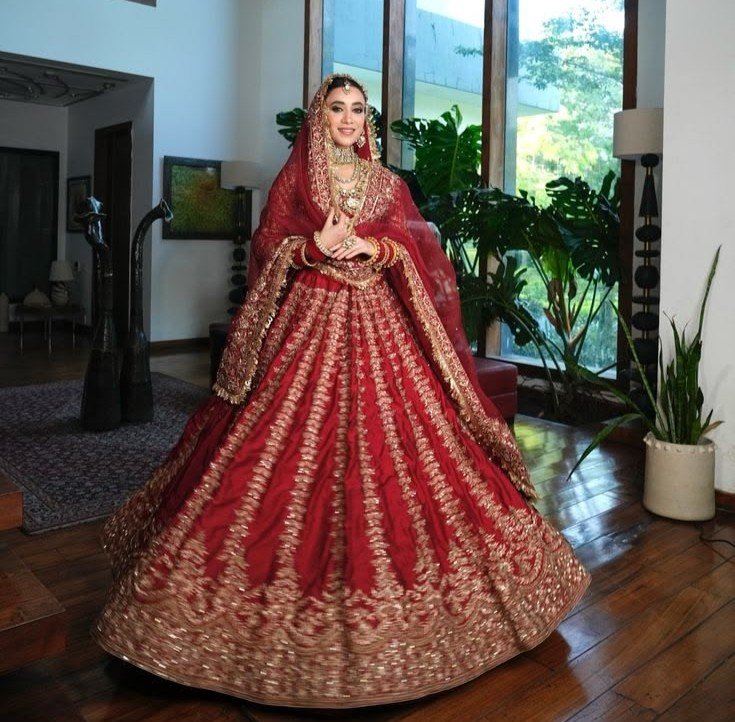
Or should you choose a Banarasi bridal lehenga with a dramatic silhouette, statement blouse and beautifully styled dupatta?

There is no universal right answer.

For weddings in 2026–27, bridal fashion is increasingly moving beyond a simple traditional-versus-modern choice. Current bridal coverage shows a wider range of personal styles, bespoke silhouettes, textile-led wardrobes, richer colours, heirloom pieces and outfits selected around how they move, photograph and feel on the bride.

That makes this decision more interesting than ever.

In this guide, we compare Banarasi bridal lehengas vs Banarasi bridal sarees across comfort, tradition, styling, photographs, versatility, wedding functions, repeat wear, investment value and long-term appeal.


Banarasi Bridal Saree vs Bridal Lehenga at a Glance

FeatureBanarasi Bridal SareeBanarasi Bridal Lehenga
Overall LookTimeless, elegant & traditionalGrand, structured & statement-making
DrapeFluid and personalisedStructured and ready-shaped
Heritage FeelExtremely strongStrong, especially with woven Banarasi textiles
MovementDepends on draping and fabric weightDepends on skirt construction and weight
Styling FlexibilityVery highHigh
PhotographyGraceful & sophisticatedDramatic & editorial
Repeat WearExcellentGood, especially when separates are versatile
Best ForBrides who love sarees & traditional drapesBrides wanting a lehenga silhouette
Learning CurveMay require draping assistanceEasier once fitted correctly
Heirloom AppealExceptionalExceptional when craftsmanship is strong
Best Personality MatchClassic, elegant, rootedRegal, fashion-forward, dramatic

The right choice ultimately depends on your wedding ceremony, personal style, comfort, body movement, climate, jewellery, blouse preference and how much use you want from the outfit after the wedding.


What Makes a Banarasi Bridal Saree Special?

A Banarasi saree is deeply connected with the weaving heritage of Varanasi.

Banaras Brocades and Sarees are a registered Geographical Indication, and official descriptions highlight finely woven textiles, intricate zari ornamentation and distinctive traditional motifs and techniques associated with Banaras.

For a bride, that heritage can add something that goes beyond fashion.

A Banarasi bridal saree can represent:

Tradition + Craftsmanship + Family Heritage + Individual Style

The saree itself becomes the silhouette.

Its border creates the frame.

Its pallu becomes a visual focal point.

Its zari catches the light.

And the way it is draped can completely change its character.

That flexibility is one of the strongest arguments in favour of choosing a saree for your wedding.


What Makes a Banarasi Bridal Lehenga Special?

A Banarasi bridal lehenga offers a very different experience.

Instead of building the silhouette through draping, the skirt already provides the basic shape.

The outfit can include:

Lehenga skirt + blouse/choli + dupatta

or, in more elaborate designs:

Lehenga + blouse + one or more dupattas + belt/jacket/cape

A Banarasi lehenga can combine woven textile traditions with contemporary bridal construction.

This is particularly attractive for brides who want the visual richness of Banarasi craftsmanship while preferring a more structured, fashion-forward silhouette.

Current bridal fashion coverage also points toward more individualised and bespoke bridal dressing, with designers highlighting versatility, sculpted silhouettes and garments that reflect the bride’s own personality rather than simply following a fixed formula.


Bridal Saree or Lehenga: Which Looks More Traditional?

If your idea of bridal beauty is strongly connected to classic Indian dressing, the Banarasi saree usually has the advantage.

A saree immediately communicates:

  • Indian textile heritage
  • Traditional draping
  • Zari craftsmanship
  • Regional styling
  • Family and cultural continuity

That makes it particularly compelling for a traditional wedding ceremony.

A Banarasi lehenga can absolutely feel traditional, but its silhouette is more contemporary and fashion-oriented.

Choose the Saree if:

Your dream bridal image involves:

silk + zari + pleats + pallu + traditional jewellery

Choose the Lehenga if:

Your dream bridal image involves:

voluminous skirt + statement blouse + dupatta + dramatic silhouette


Which One Feels More Regal?

This depends on what you mean by “regal.”

A heavily woven Banarasi saree with a broad zari border, elaborate pallu and traditional jewellery can look extraordinarily royal.

A grand Banarasi bridal lehenga with a structured skirt, ornate blouse and layered dupatta can create an equally dramatic royal effect.

So the difference is really one of silhouette.

Saree Luxury

Textile-led + drape-led + heritage-led

Lehenga Luxury

Silhouette-led + styling-led + statement-led

Neither is inherently more luxurious.

The quality of the fabric, weaving, zari, design and construction matters much more than whether the outfit is technically a saree or lehenga.


Which Is Better for the Wedding Ceremony?

Consider what your ceremony looks like.

If you are having a traditional ceremony with rituals that involve sitting, standing, walking and moving between different spaces, you should think carefully about how your outfit behaves.

A saree offers flexibility because you can adjust the drape.

A lehenga provides a more consistent silhouette but can become difficult if the skirt is extremely heavy.

For a Traditional Main Ceremony

A Banarasi bridal saree is an excellent choice when you want heritage to remain the centre of the look.

For a Grand Reception

A Banarasi bridal lehenga can be ideal when you want a dramatic, highly styled silhouette.

This also creates an opportunity to wear both across different wedding events rather than forcing one outfit to do everything.


Which One Is Easier to Manage?

This is one of the most practical questions brides should ask.

Banarasi Saree

A saree may require:

  • Proper pleating
  • Drape adjustment
  • Pins
  • Blouse fitting
  • Underskirt support
  • Someone to help you drape

But once correctly draped, it can be surprisingly adaptable.

Banarasi Lehenga

A lehenga generally requires less draping work.

You simply wear:

Skirt + blouse + dupatta

However, a very heavy skirt or highly embellished dupatta can still affect comfort and movement.

Winner for Simplicity

Lehenga

Winner for Draping Flexibility

Saree


Which Is Better for Long Wedding Functions?

This is where you should ignore fashion photographs for a moment.

Think about your actual wedding day.

How long will you be wearing the outfit?

Will you sit for hours?

Will you dance?

Will you walk extensively?

Will the wedding be indoors or outdoors?

Will the weather be humid?

Will you be travelling between venues?

These details matter.

Vogue’s recent wedding coverage, for example, has specifically highlighted how brides are increasingly considering how garments move, photograph and feel rather than choosing solely according to traditional fashion rules.

Lightweight Banarasi Saree

Can be more comfortable for extended wear when chosen with the right fabric and zari density.

Heavy Banarasi Lehenga

Can look spectacular but should be tested for movement before the wedding.

Practical Rule

Never choose a bridal outfit based only on how it looks when standing still.

Walk in it.

Sit in it.

Turn around.

Lift your arms.

Take photographs.

Spend at least 20–30 minutes wearing it before finalising.


Which One Is Better for Bridal Photography?

Both can photograph beautifully, but they create different visual stories.

Banarasi Saree Photography

A saree creates beautiful opportunities for:

  • Pallu movement
  • Traditional portraits
  • Close-up zari photographs
  • Draped full-length shots
  • Jewellery-focused portraits
  • Candid family photographs

The flowing pallu can also create beautiful movement in photographs.

Banarasi Lehenga Photography

A lehenga creates stronger opportunities for:

  • Full-skirt photographs
  • Twirl shots
  • Detailed blouse portraits
  • Dupatta compositions
  • Bridal stage photographs
  • Editorial-style images

Winner?

Tie—but for different reasons.

Choose saree for grace and heritage.

Choose lehenga for volume and drama.


Which One Is More Comfortable?

There is no automatic winner.

Comfort depends on the actual garment.

A 5-kilogram lehenga can obviously be more tiring than a lighter silk saree.

But a heavily zari-worked Banarasi saree can also become substantial.

Pay attention to:

Fabric weight

Zari density

Embroidery

Lining

Waist construction

Blouse fitting

Dupatta weight

Length

The ideal bridal outfit should feel secure without feeling restrictive.


Which One Is Better for Indian Summer Weddings?

For warm-weather weddings, fabric selection matters enormously.

A heavy bridal outfit can become uncomfortable in heat and humidity.

If your wedding is during a warmer period, consider:

Saree

A lighter Banarasi silk or a less densely worked Banarasi can offer better comfort.

Lehenga

Choose a breathable construction and avoid unnecessarily heavy layers underneath the skirt.

For very warm events, lightweight textiles and controlled embellishment may be more comfortable than maximum embroidery.


What About Winter Weddings?

Winter gives you more flexibility.

A richer silk Banarasi saree can work beautifully.

A heavily woven Banarasi lehenga can also be much easier to wear comfortably.

This is a great time to consider:

Katan Silk

Rich Banarasi Brocade

Velvet blouse details

Layered dupattas

Structured jackets

The heavier visual language feels naturally appropriate for winter weddings.


Banarasi Saree vs Lehenga: Which Is More Versatile After the Wedding?

This is an important investment question.

A bridal outfit should ideally not become a garment you never wear again.

Saree

A good Banarasi saree can be worn later for:

  • Festivals
  • Family weddings
  • Anniversaries
  • Puja
  • Receptions
  • Formal events

You can completely change the look with a new blouse.

That makes the saree exceptionally versatile.

Lehenga

A lehenga can also be reused.

The skirt can be paired with a different blouse.

The blouse can be worn with another saree.

The dupatta can be styled with suits or other lehengas.

Current bridal fashion is increasingly interested in pieces that can move beyond a single wedding event, with Vogue also highlighting brides transforming heirloom sarees into new silhouettes and occasionwear.

Winner for Easy Repeat Wear

Banarasi Saree

Winner for Modular Styling

Banarasi Lehenga


Which Has Better Heirloom Potential?

This is a difficult category because both can become heirlooms.

But a traditional Banarasi saree has one major advantage:

It is already designed as a long-term textile heirloom.

A saree can be carefully stored, worn at significant family occasions and eventually passed to another generation.

An especially meaningful example is the growing interest in heirloom textiles. Vogue reported in 2026 on brides transforming family saris into new wedding garments, showing how inherited textiles are increasingly being integrated into contemporary bridal wardrobes.

A bridal lehenga can certainly become an heirloom, especially when its separate pieces remain wearable.

But the saree has a particularly strong cultural history as a passed-down garment.


Which One Gives You More Styling Options?

Saree

You can change:

  • Blouse
  • Draping style
  • Jewellery
  • Hairstyle
  • Belt
  • Dupatta
  • Footwear

The same saree can look completely different with a different blouse and drape.

Lehenga

You can change:

  • Blouse
  • Dupatta
  • Belt
  • Jewellery
  • Jacket
  • Skirt styling

A modular lehenga can therefore be very versatile.

The Winner

Saree for drape flexibility.

Lehenga for mix-and-match separates.


What About a Banarasi Saree with a Lehenga?

Here is an option many modern brides overlook:

You don’t necessarily have to choose one.

You can wear:

Main Wedding

Banarasi bridal saree

Reception

Banarasi bridal lehenga

Or:

Engagement

Banarasi lehenga

Wedding

Traditional Banarasi saree

This approach allows you to express two different sides of your bridal style.

Current bridal fashion increasingly embraces multiple bridal personalities rather than one fixed template, from traditional sarees to statement lehengas and textile-led wardrobes.


Could You Turn a Banarasi Saree into a Lehenga Later?

Yes, depending on the saree, fabric, weaving and construction, a saree can sometimes be repurposed into a lehenga or another garment.

But do not cut a valuable handwoven heirloom without careful planning.

A rare or particularly valuable Banarasi saree may be more meaningful in its original form.

If you are considering conversion, first have the textile assessed by an experienced professional who understands silk and Banarasi weaving.


How to Choose Your Bridal Banarasi Fabric

The silhouette is only half the decision.

The fabric matters too.

Katan Silk

A strong choice for a traditional, rich and structured bridal appearance.

Khaddi Georgette

Useful when you want something lighter and more fluid.

Banarasi Brocade

Ideal when elaborate woven ornamentation is the priority.

Organza-Based Banarasi

Can create a lighter, more structured and somewhat sheer aesthetic, depending on construction.

Muga/Munga-Based Silk

An interesting choice for brides seeking a distinctive silk character; check the exact composition and weaving details because Muga is a specific silk tradition associated with Assam rather than simply a synonym for Banarasi silk.

The most important rule:

Choose the fabric according to the outfit’s weight, construction and your wedding conditions—not just the product name.


How to Choose Your Bridal Colour for 2026–27

Red remains an iconic bridal colour.

But modern bridal wardrobes have become much broader.

Current bridal coverage highlights brides choosing deeper colours, ivory and neutral palettes, textile-led dressing and personalised colour stories rather than treating one shade as mandatory.

For a Banarasi bridal saree, consider:

Classic Red

For an unmistakably traditional bridal look.

Deep Maroon

Elegant and sophisticated.

Rani Pink / Magenta

Festive and vibrant.

Emerald Green

Rich and regal.

Royal Blue

Distinctive and dramatic.

Wine

Modern but luxurious.

Ivory / Gold

Elegant for brides who want understated sophistication.

Dual-Tone or Contrast Sarees

Excellent for brides who want a more individual look.

The right colour is not necessarily the trendiest colour.

It is the colour that photographs beautifully, suits your skin tone and still feels meaningful years later.


How to Choose the Right Banarasi Bridal Saree

Look for:

Good fabric quality

Clearly described composition

Well-finished zari

A balanced border-to-body proportion

A pallu you genuinely love

A blouse that complements the saree

Weight you can comfortably carry

A reputable seller

For premium silk purchases, certification can also matter. The Silk Mark Organisation of India states that the Silk Mark label is used for 100% pure silk products by authorised users, while also clarifying that Silk Mark does not certify zari purity or quality.


How to Choose the Right Banarasi Bridal Lehenga

For a lehenga, look beyond the embroidery.

Check:

Skirt Structure

Does it move comfortably?

Waistband

Does it remain secure when you sit and walk?

Blouse

Can you breathe, sit and raise your arms comfortably?

Dupatta

Is it too heavy?

Lining

Does it feel comfortable against the skin?

Hem

Will it drag?

Weight

Can you comfortably wear it for several hours?

Repeat Wear

Can you separate and restyle the pieces later?

A beautiful bridal outfit should not become a burden after the first 30 minutes.


Banarasi Bridal Saree vs Lehenga for Different Wedding Functions

Wedding FunctionBetter Choice
EngagementBanarasi Lehenga
MehendiLighter Banarasi Lehenga / Saree
HaldiLightweight festive outfit
SangeetBanarasi Lehenga
Main Wedding CeremonyBanarasi Bridal Saree
ReceptionBanarasi Lehenga or Saree
Post-Wedding PujaBanarasi Saree
Family CelebrationBanarasi Saree
Anniversary / Future EventsBanarasi Saree

This isn’t a rulebook.

It is simply a practical starting point.


Which One Should You Choose Based on Your Personality?

Choose a Banarasi Bridal Saree If You Are:

Traditional

You love classic Indian dressing.

Textile-focused

You care deeply about weaving, silk and zari.

Minimalist

You prefer the saree to speak instead of adding layers.

Heirloom-minded

You want something your family can preserve.

A saree lover

You already know you feel confident in a saree.


Choose a Banarasi Bridal Lehenga If You Are:

Statement-driven

You want a dramatic silhouette.

Contemporary

You prefer structured fashion.

Photography-focused

You love the impact of a full skirt and layered dupatta.

Experimenting

You want more freedom with blouse, jacket and dupatta combinations.

Comfortable with modern bridal styling

You want tradition interpreted through a contemporary shape.


7 Questions to Ask Before Buying Your Bridal Outfit

Before paying for a bridal Banarasi saree or lehenga, ask yourself:

1. Can I wear this comfortably for 6–8 hours?

2. Can I sit comfortably in it?

3. Can I walk without assistance?

4. Does the outfit photograph well from multiple angles?

5. Is the fabric and construction clearly explained?

6. Can I realistically wear it again?

7. Do I love it—or am I buying it because everyone else is wearing something similar?

That final question may be the most important.


The 2026–27 Bridal Rule: Personal Style Wins

One clear direction in current bridal fashion is a move toward individuality.

Rather than every bride following the same formula, contemporary bridal dressing is becoming more personal, with designers and bridal commentators emphasising clothes that reflect the wearer’s identity, movement, photography needs and relationship to tradition.

That means your wedding outfit does not have to satisfy anyone else’s definition of a “proper bride.”

You can wear a red Banarasi saree.

You can wear an ivory lehenga.

You can wear a magenta silk saree.

You can combine an heirloom textile with a modern blouse.

You can wear a saree for the pheras and a lehenga for the reception.

The best bridal outfit is the one that feels like you.


Our Verdict: Banarasi Bridal Saree or Bridal Lehenga?

There is no single winner.

Choose the Banarasi Bridal Saree for:

Heritage

Timelessness

Drape versatility

Heirloom potential

Repeat wear

Traditional elegance

Choose the Banarasi Bridal Lehenga for:

Drama

Structured styling

Contemporary bridal fashion

Statement photography

Separate-piece versatility

Modern silhouettes

And for brides who genuinely cannot decide?

Wear both.

Let the saree carry the heritage of your wedding ceremony.

Let the lehenga bring drama to the reception.

There is no reason your bridal wardrobe has to tell only one story.


Final Thoughts

A wedding outfit should do more than make you look beautiful.

It should make you feel comfortable enough to live the day.

You will sit.

You will walk.

You will laugh.

You will greet relatives.

You will pose for photographs.

You may dance.

And years later, you may look back at those photographs and remember exactly how you felt.

So don’t choose between a Banarasi bridal saree and a Banarasi bridal lehenga simply because one is more fashionable.

Choose based on:

Your ceremony + your comfort + your personal style + your textile preference + your future use

A Banarasi saree offers the beauty of a timeless drape.

A Banarasi lehenga offers the drama of a modern bridal silhouette.

Both can be extraordinary.

But the most beautiful bridal outfit is always the one that feels unmistakably yours.

The Banarasi Style

Timeless Elegance Woven in Varanasi.


Frequently Asked Questions

Is a Banarasi saree good for bridal wear?

Yes. A richly woven Banarasi silk saree can be an exceptional bridal choice, particularly for brides who value traditional Indian textile heritage, zari and classic draping.

Is a Banarasi lehenga good for a wedding?

Yes. A Banarasi lehenga can combine the heritage character of Banarasi textiles with a structured, contemporary bridal silhouette.

Which is more comfortable, a bridal saree or lehenga?

Neither is automatically more comfortable. Comfort depends on fabric weight, zari or embroidery density, construction, fitting and the length of time you will wear the outfit.

Which is better for a traditional Indian wedding?

A Banarasi bridal saree is often the stronger choice when you want a traditional, textile-led bridal look. A Banarasi lehenga can also be traditional while offering a more contemporary silhouette.

Which one is better for a reception?

Both can work. A Banarasi lehenga can create a dramatic reception look, while a Banarasi saree offers timeless elegance and can be styled in a more contemporary way.

Can I wear a Banarasi saree after my wedding?

Absolutely. This is one of its biggest advantages. A Banarasi saree can be restyled with different blouses and jewellery for festivals, anniversaries, family weddings and formal occasions.

Can a Banarasi saree be converted into a lehenga?

Depending on the fabric and construction, it may be possible, but valuable handwoven or heirloom sarees should not be cut without professional assessment.

Is red necessary for a Banarasi bridal saree?

No. Red remains a timeless bridal colour, but contemporary brides are increasingly choosing personalised palettes including magenta, pink, green, ivory, wine and other shades.

How can I check whether a silk Banarasi saree is pure silk?

Look for reliable documentation and, where applicable, Silk Mark certification. The Silk Mark Organisation of India states that its label is used for 100% pure silk products by authorised users.


The Banarasi Style – Timeless Elegance Woven in Varanasi

Welcome to The Banarasi Style, where tradition meets elegance through the finest collection of authentic Banarasi sarees. Inspired by the rich weaving heritage of Varanasi, we bring you handcrafted masterpieces that reflect grace, culture, and timeless beauty.

Our collection features exquisite Banarasi silk sarees, luxurious Katan weaves, delicate Organza designs, and elegant Georgette drapes. Each saree is crafted by skilled artisans whose expertise has been passed down through generations, preserving the true essence of Banarasi craftsmanship.

At The Banarasi Style, we believe a Banarasi saree is more than just an outfit—it is a symbol of heritage, artistry, and sophistication. From grand weddings and festive celebrations to special family occasions, our sarees are designed to make every moment memorable.

The intricate zari work, traditional motifs, rich textures, and vibrant colors showcase the beauty of Indian handloom traditions. Whether you prefer classic designs or contemporary patterns, our carefully curated collection offers something for every style and occasion.

We are committed to providing premium quality, authentic craftsmanship, and exceptional customer satisfaction. Every piece in our collection reflects attention to detail, superior weaving techniques, and the timeless charm that has made Banarasi sarees treasured across generations.

Explore our exclusive collection and experience the elegance of genuine Banarasi sarees. Let The Banarasi Style bring the royal legacy of Varanasi into your wardrobe with designs that celebrate tradition, beauty, and individuality.