
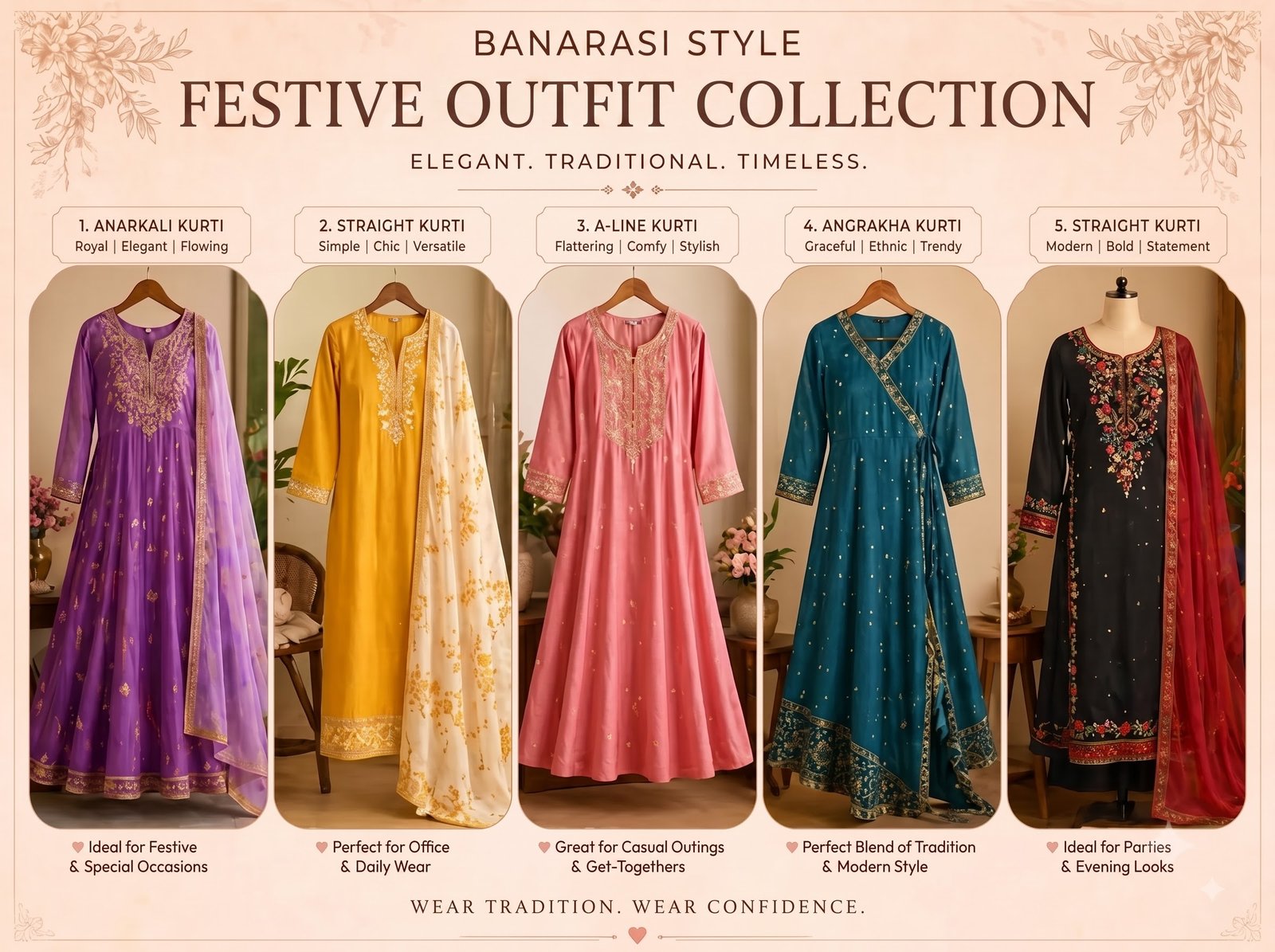
A complete Indian festive-wear colour guide for Janmashtami, Onam and Ganesh Chaturthi
Festivals give us the perfect reason to dress beautifully.
But festive dressing is not only about choosing the latest trend. In India, colour often carries a cultural mood—devotion, prosperity, celebration, purity, joy or regional identity.
And that makes choosing the right festive colour a little more interesting.
For Janmashtami, shades inspired by Krishna’s traditional visual imagery make yellow and blue natural choices.
For Onam, the classic white-and-gold aesthetic of Kerala offers an entirely different kind of elegance.
For Ganesh Chaturthi, bright yellow, orange, red and green create a joyful festive palette, particularly in the context of Maharashtrian celebrations.
The dates also make this particular festive season interesting. In 2026, Thiruvonam falls on August 26, Ganesh Chaturthi falls on September 14, and Krishna Janmashtami is observed on September 4 in the cited Indian panchang calculations. Festival observance can vary by location and tradition, so local calendars should be checked for puja timings.
So, what should you wear?
Let’s explore the colours, fabrics, sarees, suits and styling ideas that work beautifully for each festival.
Why Colour Matters in Festive Indian Dressing
Colour can change the entire personality of an outfit.
A yellow Banarasi saree feels completely different from a deep blue Katan saree.
A white-and-gold Kerala-inspired look feels different from a vibrant orange festive suit.
The best festive outfits usually balance three things:
Cultural context + personal style + comfort
You don’t need to wear a specific colour simply because someone says it is “the festival colour.”
Instead, understand the visual language of the festival and then choose a shade that suits you.
Janmashtami Colour Guide
The Traditional Janmashtami Palette: Yellow and Blue
For Janmashtami, yellow and blue are among the most recognisable colours associated with Krishna-inspired festive dressing.
This connection comes from traditional iconography in which Krishna is commonly depicted wearing yellow garments, while blue is associated with his characteristic depiction.
Current 2026 fashion and festive-wear guides continue to identify yellow and blue as the most recognisable Janmashtami colours.
For a more traditional look, yellow generally makes the strongest statement.
For something more dramatic, deep blue or peacock blue can be stunning.
And combining the two creates an unmistakably festive palette.
1. Yellow Banarasi Saree for Janmashtami
Yellow is an easy way to bring the spirit of Janmashtami into your outfit.
You don’t need an extremely bright yellow.
Consider:
Mustard
Marigold
Turmeric yellow
Saffron-leaning yellow
Soft pastel yellow
A yellow Banarasi saree with gold zari can create a beautifully traditional look.
Style It With
- Gold jhumkas
- Small bindi
- Traditional bangles
- Low bun
- Fresh flowers
Best For
Temple visits, family puja and traditional Janmashtami celebrations.
2. Peacock Blue Banarasi Saree
Want a more dramatic Janmashtami look?
Choose peacock blue, royal blue or deep Krishna-inspired blue.
A blue Banarasi saree with gold zari can look particularly beautiful for an evening celebration.
Style Combination
Blue Banarasi + antique gold jewellery + traditional blouse
For a softer effect, choose:
Powder blue + muted gold
3. Yellow and Blue Combination
You don’t have to choose one.
Try:
Yellow saree + blue blouse
or
Blue saree + yellow dupatta
or
Yellow kurta + blue Banarasi dupatta
This creates a festive colour story while allowing you to experiment with different shades.
4. Janmashtami Suit Idea
Not everyone wants to wear a saree.
A yellow or blue 3-piece suit is a beautiful alternative.
Try:
Yellow kurta + straight pants + blue Banarasi dupatta
This works especially well for family celebrations where you want something traditional but easy to move in.
5. Janmashtami Minimal Look
For a subtle festive outfit, choose:
Cream kurta + yellow Banarasi dupatta
or
Off-white suit + blue dupatta
This is a great option when you prefer understated Indian fashion.
What Fabric Should You Wear for Janmashtami?
Your fabric should match the activity.
For a home puja:
Silk, cotton-silk or elegant Banarasi
can work beautifully.
For a long daytime celebration:
Lightweight fabrics can be more comfortable.
For crowded outdoor events such as Dahi Handi celebrations, a practical outfit is more important than an elaborate silk look. Current festive-wear guides also distinguish between temple/puja dressing and more physically active Dahi Handi environments.
Onam Colour Guide
Onam has a completely different visual language.
Kerala’s most recognisable festive aesthetic is the combination of:
White / Ivory + Gold
This is particularly associated with Kerala’s traditional kasavu textiles and festive attire.
Kerala Tourism describes Onam as a ten-day festival beginning with the Atham star and highlights the importance of Pookkalam, Onasadya, cultural performances and families dressing in their finest new clothes.
In 2026, Thiruvonam is on August 26, according to Kerala Tourism’s official festival calendar.
6. Ivory and Gold: The Classic Onam Look
For an authentic Kerala-inspired festive appearance, ivory, cream or off-white with gold is difficult to beat.
Think:
Ivory saree + gold zari
Cream kurta + gold dupatta
Off-white Banarasi saree + gold blouse
The beauty is in the restraint.
You don’t need ten colours.
You need excellent texture and a well-chosen gold accent.
7. White and Gold Banarasi Saree
Want to bring your Banarasi wardrobe into your Onam celebrations?
Choose a:
Cream / ivory / off-white Banarasi saree with gold zari
The Banarasi texture adds richness while the lighter colour palette creates a clean festive appearance.
Style It With
Gold earrings + simple bangles + traditional hair styling
This works beautifully for:
- Onam lunch
- Family gatherings
- Cultural events
- Festive photographs
8. Pastel Green for a Modern Onam Look
If pure white feels too traditional for your personal style, introduce a soft colour.
Try:
Pista
Sage
Mint
Soft green
with ivory and gold.
The result still feels festive without losing the elegant character of an Onam-inspired palette.
9. Floral-Inspired Onam Styling
Onam is closely associated with Pookkalam, the colourful floral carpet arrangements made during the festival.
That makes floral colour accents a natural styling choice.
Try:
Ivory saree + floral blouse
or
Cream outfit + colourful Banarasi dupatta
The base remains subtle while the accessories or accent piece bring colour.
What Should You Wear for an Onam Celebration?
The best outfit depends on where you are celebrating.
Traditional Onam Celebration
White/ivory + gold saree
Office Onam Celebration
Cream kurta + festive dupatta
Family Onam Lunch
Light saree + gold jewellery
Cultural Event
Elegant traditional saree + minimal styling
The goal is sophistication rather than excessive embellishment.
Ganesh Chaturthi Colour Guide
Ganesh Chaturthi brings yet another visual language.
Across contemporary festive-wear and Maharashtra-focused styling guides, yellow, orange, red and green are commonly used to create an auspicious and celebratory palette. Yellow and orange connect strongly with marigold and festive ritual imagery, while red and green are also commonly incorporated into festive dressing.
In 2026, Ganesh Chaturthi falls on Monday, September 14 in the cited panchang calculations.
10. Yellow Banarasi Saree for Ganesh Chaturthi
Yellow is one of the easiest colours for a Ganesh Chaturthi outfit.
A bright yellow Banarasi can feel:
Joyful + Traditional + Festive
For a sophisticated version, choose:
Mustard yellow + antique gold
rather than an extremely neon yellow.
Style With
Gold jhumkas + bangles + traditional sandals
11. Orange and Saffron for a Bold Festive Look
Orange creates instant festive energy.
Try:
Saffron
Marigold orange
Burnt orange
Terracotta
These shades pair beautifully with gold zari.
For an evening celebration, deeper orange can look especially elegant.
12. Red Banarasi Saree for Ganesh Chaturthi
Red works beautifully when you want a more traditional and celebratory outfit.
Try:
Red Banarasi saree + gold zari + classic blouse
You can keep your jewellery relatively understated if the saree itself is heavily woven.
13. Green for a Fresh Ganesh Chaturthi Look
Green provides a fresh alternative to yellow and red.
Try:
Parrot green
Emerald
Mehendi green
Pista
For a sophisticated look, emerald green with gold zari is particularly striking.
Contemporary Ganesh Chaturthi styling guides also identify green as an appropriate festive shade, with associations to the green elements used in puja.
14. Banarasi Dupatta + Simple Kurta for Ganesh Chaturthi
You don’t need a saree.
A bright Banarasi dupatta can transform a simple outfit.
Try:
Cream kurta + orange Banarasi dupatta
Yellow kurta + green Banarasi dupatta
Green kurta + red Banarasi dupatta
This is particularly useful for women who prefer comfortable festive dressing.
15. Maharashtrian-Inspired Festive Look
Ganesh Chaturthi has particularly strong visual associations with Maharashtra.
For a regional-inspired look, you can consider:
Traditional saree draping + gold jewellery + classic festive colours
A Nauvari-inspired or Maharashtrian styling direction can work beautifully for cultural celebrations, but regional drapes should be worn respectfully and ideally learned from reliable sources rather than treated as a costume.
For someone who simply wants the colour language of the festival, a regular Banarasi saree in yellow, orange, red or green can achieve the festive effect without recreating a specific regional costume.
The Three-Festival Colour Guide
| Festival | Signature Colour Direction | Best Banarasi Choice |
|---|---|---|
| Janmashtami | Yellow + Blue | Yellow/blue Banarasi saree or suit |
| Onam | Ivory/White + Gold | Ivory Banarasi or elegant cream-gold outfit |
| Ganesh Chaturthi | Yellow + Orange + Red + Green | Vibrant Banarasi saree or festive suit |
The palettes above describe common festive styling conventions, not mandatory dress codes.
How to Choose Your Colour According to Skin Tone
Festival dressing should still feel personal.
Warm Undertones
Try:
Mustard + gold
Marigold
Orange
Red
Olive
Warm green
Cool Undertones
Try:
Royal blue
Peacock blue
Magenta
Lavender
Cool pink
Emerald
Neutral Undertones
You have more flexibility.
Experiment with:
Yellow + gold
Pink
Green
Blue
Ivory
Red
The best test is always natural light.
How to Match Your Blouse With the Festival Colour
You don’t have to make the blouse exactly the same colour as the saree.
Monochrome
Yellow saree + yellow blouse
Contrast
Yellow saree + blue blouse
Metallic
Green saree + gold blouse
Neutral
Orange saree + ivory blouse
Tone-on-Tone
Pink saree + darker pink blouse
Contrast can make a traditional outfit feel much more contemporary.
Banarasi Saree or Suit: What Should You Wear?
Choose a Saree When:
You want a traditional appearance.
You enjoy dressing up.
You want statement family photographs.
You are attending a puja or formal gathering.
Choose a Suit When:
You want maximum movement.
You have a long day of celebrations.
You prefer an easy silhouette.
You are not comfortable managing a saree.
A beautifully woven Banarasi dupatta can provide the traditional touch even when the rest of the outfit is simple.
How to Make Festive Dressing Look Expensive
You don’t need the heaviest outfit.
Focus on:
Good fabric
Controlled colour palette
Quality zari
Well-fitted blouse or kurta
Balanced jewellery
Clean draping
The difference between “festive” and “overdressed” is often simply balance.
One Statement Piece Is Enough
If your saree has heavy zari:
Keep the blouse relatively simple.
If your blouse is heavily embellished:
Choose a cleaner saree.
If the dupatta has an elaborate border:
Keep the kurta minimal.
If the jewellery is dramatic:
Don’t add too many additional accessories.
This simple principle works for all three festivals.
Three Ready-to-Wear Outfit Formulas
Janmashtami
Yellow Banarasi saree + blue blouse + gold jhumkas + flowers
Onam
Ivory/gold saree + simple blouse + traditional gold jewellery
Ganesh Chaturthi
Orange or green Banarasi saree + gold zari blouse + festive jewellery
Simple.
Traditional.
Photogenic.
How to Build a Festive Wardrobe That Works Beyond One Festival
The smartest festive wardrobe doesn’t contain one outfit for every festival.
Instead, invest in versatile pieces.
For example:
One Ivory Banarasi Dupatta
Can work for:
Onam + Diwali + Puja + family functions
One Yellow Banarasi Saree
Can work for:
Janmashtami + Raksha Bandhan + Haldi + festive lunches
One Emerald or Green Banarasi Saree
Can work for:
Ganesh Chaturthi + Diwali + weddings + receptions
One Rich Magenta Saree
Can work across:
Festivals + weddings + family events
This gives you much more value from your wardrobe.
The Banarasi Advantage
Banarasi textiles naturally lend themselves to festive dressing because the combination of:
silk + texture + zari + traditional motifs
already creates a sense of occasion.
That means you don’t need extreme embellishment.
A well-chosen Banarasi saree can make a beautifully polished festive outfit with comparatively simple accessories.
And the same principle applies to Banarasi dupattas and festive suit fabrics.
A Note About “Festival Colours”
It’s worth remembering that there is rarely one universally mandated clothing colour for an Indian festival.
Regional traditions, family customs, temples and individual beliefs can differ.
For example, current Janmashtami fashion guides often emphasise yellow and blue, while Onam’s most iconic Kerala visual language centres on white, cream and gold. Ganesh Chaturthi styling commonly uses yellow, orange, red and green, particularly in Maharashtra.
Treat these palettes as styling inspiration, not strict religious rules.
Your comfort and personal style still matter.
Festival Dates for 2026
For readers planning their festive wardrobe, these are useful reference dates:
Thiruvonam / Onam
Wednesday, August 26, 2026 according to Kerala Tourism’s official festival calendar.
Krishna Janmashtami
Friday, September 4, 2026 in the cited panchang calculations for North Indian locations.
Ganesh Chaturthi
Monday, September 14, 2026 in the cited panchang calculations.
Festival dates and observance can vary by region and local tradition, particularly for religious timings, so confirm the local calendar when planning temple visits or puja.
Final Thoughts
Festive fashion doesn’t need to be complicated.
Sometimes one colour says everything.
Yellow and blue for Janmashtami.
Ivory and gold for Onam.
Yellow, orange, red and green for Ganesh Chaturthi.
But don’t think of these as strict rules.
Think of them as starting points.
Choose a Banarasi saree in a colour that makes you feel beautiful.
Choose a Banarasi dupatta when you want something easier.
Choose a 3-piece suit when comfort matters.
And choose jewellery that complements rather than competes.
Because the best festive outfit is not the one with the most decoration.
It is the one that feels perfectly right for the celebration.
The Banarasi Style
Timeless Elegance Woven in Varanasi.
Frequently Asked Questions
What colour should I wear for Janmashtami?
Yellow and blue are widely used in Janmashtami-inspired dressing because of their connection with traditional Krishna imagery. Yellow is particularly popular for devotional and festive looks.
What colour is traditionally worn for Onam?
The most recognisable Kerala festive palette is white or ivory with gold, strongly associated with traditional kasavu textiles. Kerala Tourism describes Onam as a major cultural festival where families dress in new clothes and celebrate with traditional food and cultural activities.
What colours are popular for Ganesh Chaturthi?
Yellow, orange, red and green are widely used for festive Ganesh Chaturthi dressing, particularly in Maharashtra-focused styling.
Can I wear a Banarasi saree for Onam?
Yes. An ivory, cream or gold-accented Banarasi saree can create an elegant festive look while incorporating Banarasi craftsmanship into an Onam-inspired palette.
Can I wear a Banarasi suit instead of a saree?
Absolutely. A Banarasi dupatta paired with a simple kurta and trousers can create a comfortable festive outfit.
Which Banarasi colour is best for Janmashtami?
Yellow and blue are the easiest choices. You can also use cream and gold for a more understated interpretation.
Which Banarasi saree colour is best for Ganesh Chaturthi?
Yellow, orange, red and green all work beautifully. Choose the shade according to your personal style and the type of celebration.
What should I wear for a daytime festival?
Lightweight sarees, cotton-silk outfits, lighter Banarasi fabrics and comfortable 3-piece suits can be practical choices for daytime events.
What should I wear for an evening festive event?
Richer colours such as royal blue, emerald, magenta, deep red and wine can work beautifully with zari and statement jewellery.