Loading..

GET 10% OFF BY USING CODE TBS10

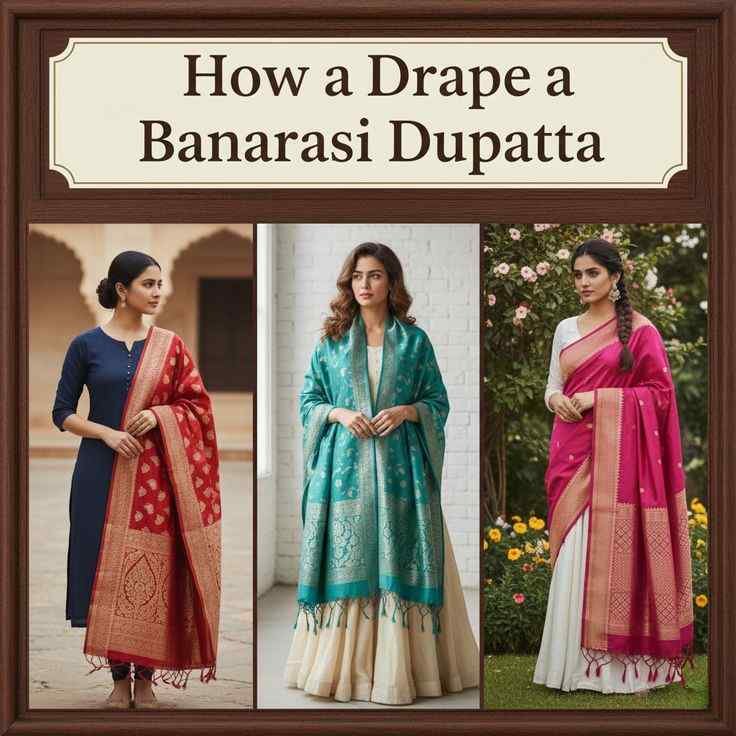
8 Ways to Style a Banarasi Dupatta (Beyond the Suit)

From saree drapes to lehengas and contemporary outfits, discover new ways to wear the timeless Banarasi dupatta

A Banarasi dupatta is one of those pieces that can completely transform an outfit.

Known for its rich woven texture, traditional motifs, zari details and unmistakable festive appeal, a Banarasi dupatta does not have to live inside a salwar suit.

In fact, one beautiful dupatta can work with much more than a matching kurta.

You can drape it over a saree, pair it with a lehenga, style it with a plain kurta, layer it over an anarkali or even use it to bring a traditional touch to a contemporary outfit.

That versatility makes a Banarasi dupatta one of the most useful additions to an Indian ethnic wardrobe.

So, whether you already own one or are planning to buy your first one, here are 8 stylish ways to wear a Banarasi dupatta beyond the traditional suit.


Why Every Ethnic Wardrobe Needs a Banarasi Dupatta

A beautifully woven Banarasi dupatta can add instant richness to even the simplest outfit.

You do not necessarily need:

  • A heavily embroidered kurta
  • A designer lehenga
  • A statement blouse
  • Excessive jewellery

Sometimes, a plain outfit paired with a beautiful Banarasi dupatta is enough.

The contrast between a simple base and a richly woven dupatta allows the fabric and craftsmanship to stand out.

This is particularly useful when you want an outfit that feels festive without looking overdone.


1. Style a Banarasi Dupatta with a Plain Kurta

Let’s start with the easiest combination.

Take a simple solid-colour kurta and add a contrasting Banarasi dupatta.

That’s it.

A plain ivory kurta can be paired with a magenta dupatta.

A yellow kurta can work beautifully with pink or green.

A black kurta can become instantly festive with a rich gold-toned Banarasi dupatta.

An off-white or beige outfit can be elevated with almost any jewel-toned Banarasi weave.

Styling Tip

Keep the kurta simple.

The purpose of the dupatta is to become the statement piece.

Add:

small jhumkas + comfortable sandals + a simple hairstyle

for an effortless festive look.

Best for:

  • Family functions
  • Festive lunches
  • Puja
  • Small celebrations
  • Office festive events

2. Drape a Banarasi Dupatta Over a Saree

This is one of the most elegant ways to experiment with a Banarasi dupatta.

Instead of wearing your dupatta as part of a suit, layer it over a saree.

This works particularly well when the saree itself is relatively simple.

For example:

Plain silk saree + Banarasi dupatta

or

Lightweight cotton/silk saree + richly woven dupatta

The additional layer creates depth and gives the overall outfit a more dramatic, occasion-ready appearance.

How to Style It

Drape your saree normally.

Then place the Banarasi dupatta over one shoulder, allowing it to fall naturally.

You can keep the pleats minimal so that the saree and dupatta remain visually distinct.

Important Styling Rule

Avoid pairing an extremely ornate saree with an extremely heavy dupatta unless you intentionally want a maximalist look.

The easiest formula is:

Simple Saree + Statement Dupatta


3. Pair It with a Lehenga

A Banarasi dupatta can be an excellent alternative to the heavily embroidered dupattas often paired with lehengas.

Imagine:

Plain or lightly embellished lehenga + Banarasi dupatta

The woven texture of the dupatta adds sophistication without requiring the entire outfit to be covered in embroidery.

This can be particularly beautiful for:

  • Engagements
  • Mehendi
  • Festive celebrations
  • Day weddings
  • Family functions

Colour Combination Ideas

Blush lehenga + Rani pink Banarasi dupatta

Yellow lehenga + Green Banarasi dupatta

Ivory lehenga + Red Banarasi dupatta

Pastel blue lehenga + Magenta Banarasi dupatta

Deep green lehenga + Gold-toned Banarasi dupatta

The contrast does most of the styling work.


4. Wear It with a Sharara or Gharara

Sharara and gharara sets are naturally festive silhouettes, and a Banarasi dupatta can make them feel even more luxurious.

Try a simple sharara set in:

ivory, peach, pink, yellow or green

and add a richly patterned Banarasi dupatta.

For a more traditional look, drape the dupatta across both shoulders.

For a more contemporary appearance, let one side fall freely while keeping the other side pinned.

Jewellery Tip

Because the outfit already has volume, avoid excessive jewellery.

A statement pair of earrings may be enough.

Best for:

Festivals, family celebrations and wedding-related events.


5. Use a Banarasi Dupatta to Transform a Plain Anarkali

Have an old or simple Anarkali sitting in your wardrobe?

Give it a completely new look with a Banarasi dupatta.

A plain Anarkali in a single colour can sometimes look dramatically different when paired with a contrasting woven dupatta.

Try:

Plain cream Anarkali + red Banarasi dupatta

or

Plain black Anarkali + gold Banarasi dupatta

or

Pastel Anarkali + rich jewel-tone Banarasi dupatta

This is one of the easiest ways to create a new festive outfit without buying an entirely new set.

Styling Tip

Match one small element of the dupatta with your footwear, jewellery or handbag.

You don’t need to match everything.


6. Create a Banarasi Dupatta + Palazzo Look

For women who prefer a relaxed silhouette, pair your dupatta with:

straight kurta + wide-leg palazzo + Banarasi dupatta

The result is comfortable enough for daytime wear while still looking festive.

This combination is particularly useful when you want traditional styling without wearing a fully traditional silhouette.

Choose:

simple kurta + solid palazzo + statement Banarasi dupatta

and let the dupatta add all the colour and texture.

Perfect for:

  • Festive office dressing
  • Casual celebrations
  • Family lunches
  • Cultural events
  • Small pujas

7. Style It with a Contemporary Indo-Western Outfit

A Banarasi dupatta does not have to stay completely traditional.

Pair it with a contemporary outfit such as:

solid maxi dress + Banarasi dupatta

plain jumpsuit + Banarasi dupatta

long skirt + simple blouse + Banarasi dupatta

solid co-ord + Banarasi dupatta

The key is contrast.

A modern silhouette combined with a traditional textile can create a sophisticated Indo-Western look.

The Styling Rule

Keep the base outfit clean.

Avoid too many competing prints.

Let the Banarasi dupatta provide the heritage element.

This approach works especially well when you want Indian craftsmanship to feel modern rather than heavily traditional.


8. Use It as a Statement Drape for Festive Photography

Sometimes the best way to style a Banarasi dupatta is simply to make it the hero.

Instead of constructing an elaborate outfit, wear:

plain kurta + trousers or skirt + statement Banarasi dupatta

Then experiment with the drape.

Try:

One-Shoulder Drape

Allow the dupatta to fall naturally from one shoulder.

Front-Fall Drape

Place it over both shoulders and let the ends fall evenly in front.

Belted Drape

Wrap the dupatta across the torso and secure it with a slim belt.

Open-Shoulder Drape

Let one shoulder remain uncovered while the dupatta is arranged loosely across the other.

These styling variations are particularly effective for photographs because the woven border and pallu-like details remain visible.


How to Choose the Right Banarasi Dupatta

Not every Banarasi dupatta will work equally well with every outfit.

Before buying one, think about:

1. Colour

If you already own many plain outfits, choose a strong statement colour.

If your wardrobe is already colourful, a neutral or muted Banarasi dupatta may give you more versatility.


2. Border

A bold zari border creates a stronger traditional effect.

A smaller border can feel more contemporary.


3. Fabric

Banarasi dupattas can be made in different textile constructions, so check the exact fabric rather than relying only on the word “Banarasi.”

The fabric affects:

  • Weight
  • Fall
  • Texture
  • Transparency
  • Comfort
  • Overall drape

4. Motifs

Floral motifs work well with feminine festive outfits.

Geometric or smaller motifs can create a more modern appearance.

Large traditional motifs can become a statement feature when paired with a minimal outfit.


5 Easy Colour Combinations for a Banarasi Dupatta

Choosing the combination is often easier than choosing the entire outfit.

Ivory + Rani Pink

Elegant and festive.

Yellow + Green

Fresh and traditional.

Black + Gold

Dramatic and sophisticated.

Peach + Magenta

Soft with a festive contrast.

Royal Blue + Gold

Rich and formal.

The simplest approach is to choose one dominant outfit colour and one statement dupatta colour.


How to Keep the Dupatta as the Hero

One of the biggest styling mistakes is creating too much competition.

If your dupatta already has:

  • Dense zari
  • Large woven motifs
  • A wide border
  • A rich contrasting colour

then the rest of your outfit does not need to be equally elaborate.

Think:

Simple Base + Beautiful Banarasi Dupatta

rather than:

Heavy Kurta + Heavy Skirt + Heavy Jewellery + Heavy Dupatta

The first combination usually looks more sophisticated.


Banarasi Dupatta Styling for Different Occasions

For Raksha Bandhan

Try:

Pastel kurta + Banarasi dupatta + delicate jewellery

Light, comfortable and festive.


For Diwali

Try:

Solid anarkali + rich Banarasi dupatta + statement earrings


For Wedding Guest Dressing

Try:

Plain lehenga + Banarasi dupatta + traditional jewellery


For Mehendi

Try:

Yellow or green sharara + contrasting Banarasi dupatta


For Puja

Try:

Simple cotton/silk kurta + elegant Banarasi dupatta


For a Festive Office Event

Try:

Straight kurta + trousers + lightweight Banarasi dupatta

This keeps the outfit polished without feeling too formal.


Can a Banarasi Dupatta Be Worn with Western Clothing?

Absolutely.

In fact, this can be one of the easiest ways to make traditional Indian textiles feel contemporary.

A solid black dress can become an Indo-Western outfit with a richly woven Banarasi dupatta.

A plain long skirt can instantly gain an Indian character.

A minimalist jumpsuit can be softened with a colourful traditional textile.

The secret is restraint.

Let one traditional piece make the statement.


Why Banarasi Dupattas Are So Versatile

The strength of a Banarasi dupatta is that it sits somewhere between accessory and garment.

It can:

  • Add colour
  • Add texture
  • Create layering
  • Define the silhouette
  • Introduce traditional craftsmanship
  • Transform a plain outfit
  • Change the overall mood of a look

That means you can wear the same dupatta repeatedly while creating completely different outfits.

One day it can be paired with a kurta.

Another day with a saree.

Another day with a lehenga.

Another day with a contemporary dress.

That is excellent wardrobe value.


How to Care for Your Banarasi Dupatta

Because many Banarasi dupattas are made using delicate textile constructions and metallic decorative threads, they should be handled carefully.

Avoid prolonged direct sunlight.

Store it clean and completely dry.

Fold gently and avoid crushing heavy zari areas.

Use breathable fabric storage rather than trapping the textile in plastic for long periods.

Follow the care instructions supplied with the particular textile.

For valuable or delicate silk pieces, professional cleaning may be preferable to experimenting with home washing.


The Best Way to Style a Banarasi Dupatta?

There isn’t one.

That’s the beauty of it.

You can wear it traditionally.

You can style it minimally.

You can make it festive.

You can make it contemporary.

You can pair it with another traditional garment or place it against a modern silhouette.

The key is to understand the visual strength of the textile.

If the dupatta is heavy:

Keep the base simple.

If the dupatta is lightweight:

You can experiment with layering.

If the dupatta has a bold border:

Use an open drape so the border remains visible.

If the dupatta has detailed motifs:

Avoid hiding them inside excessive pleats.


Final Thoughts

A Banarasi dupatta deserves more than one outfit.

It deserves a wardrobe of possibilities.

From a simple kurta to a flowing saree, a festive lehenga to a contemporary dress, this timeless Indian textile can bring colour, texture and heritage into almost any look.

So the next time you reach for your Banarasi dupatta, don’t automatically pair it with the matching suit.

Try something different.

Drape it over a saree.

Wear it with a lehenga.

Style it with a plain Anarkali.

Pair it with a contemporary outfit.

Or simply let it become the statement piece of your entire look.

Because true style is not about wearing something only one way.

It is about discovering how many stories one beautiful piece can tell.

The Banarasi Style

Timeless Elegance Woven in Varanasi.


Frequently Asked Questions

Can I wear a Banarasi dupatta without a suit?

Absolutely. A Banarasi dupatta can be styled with sarees, lehengas, shararas, ghararas, Anarkalis, palazzos, skirts and contemporary Indo-Western outfits.

What can I wear with a Banarasi dupatta?

A simple kurta, plain Anarkali, lehenga, sharara, saree, skirt, palazzo outfit or even a minimalist contemporary dress can work beautifully.

How do I style a Banarasi dupatta with a saree?

Pair a relatively simple saree with a contrasting Banarasi dupatta and drape it over one shoulder. Keeping the saree understated helps the dupatta stand out.

Can I wear a Banarasi dupatta with a lehenga?

Yes. A plain or lightly embellished lehenga paired with a richly woven Banarasi dupatta creates an elegant festive look.

Can I wear a Banarasi dupatta with Western clothes?

Yes. A Banarasi dupatta can add a sophisticated Indian element to a plain dress, skirt, jumpsuit or other minimalist contemporary outfit.

What type of outfit works best with a heavily designed Banarasi dupatta?

A simple solid-colour outfit generally works best because it allows the woven motifs, zari and border of the dupatta to remain the focus.

Is a Banarasi dupatta suitable for weddings?

Yes. Depending on its fabric, zari and design, a Banarasi dupatta can work beautifully for weddings, receptions, mehendi, engagements and other festive occasions.


Raksha Bandhan 2026: 10 Banarasi Sarees and Suits to Wear This Rakhi

Celebrate the bond of siblings in timeless Indian elegance

Raksha Bandhan is one of those festivals that feels personal.

It is a day for tying the sacred rakhi, sharing sweets, exchanging gifts, taking family photographs and spending precious time together. And because the occasion brings everyone together, it is also the perfect excuse to dress up in something beautifully traditional.

In 2026, Raksha Bandhan will be celebrated on Friday, August 28 in India.

So, what should you wear this Rakhi?

A heavy bridal saree may feel too formal. An everyday outfit may not feel festive enough. The perfect Raksha Bandhan look sits somewhere in between: traditional, elegant, comfortable and effortlessly stylish.

That is where Banarasi fashion comes in.

From lightweight Khaddi Georgette Banarasi sarees to graceful Katan Silk sarees, vibrant festive sarees and elegant 3-piece suits, there are plenty of ways to bring the beauty of Banaras into your Rakhi celebration.

Here are 10 Banarasi saree and suit ideas for Raksha Bandhan 2026.


Why Banarasi Is Perfect for Raksha Bandhan

Raksha Bandhan is a traditional Indian festival, so Indian ethnic wear naturally feels at home on the occasion.

Banarasi textiles bring together many of the qualities that make festive dressing special:

Rich colours + elegant zari + traditional motifs + graceful drape + timeless craftsmanship

The result is an outfit that looks festive without necessarily feeling overly bridal.

A beautiful Banarasi saree can work for a family lunch, Rakhi ceremony, festive gathering or evening celebration. A well-designed ethnic suit can offer the same traditional charm with the added convenience of an easy-to-wear silhouette.

The best part?

You can choose your look according to your personal style.


1. Classic Red Banarasi Saree

If you want a traditional Raksha Bandhan look that photographs beautifully, start with red.

Red has long been associated with Indian festive and ceremonial dressing, making it an easy choice when you want your outfit to immediately feel celebratory.

Choose a red Banarasi saree with:

  • Gold zari
  • Traditional buti motifs
  • A defined zari border
  • A detailed pallu
  • A classic blouse

For a balanced Rakhi look, avoid going too heavy with jewellery.

Pair it with:

Jhumkas + bangles + a small bindi + traditional sandals

The result is classic, feminine and festive.

Best for:

Traditional family celebrations and Rakhi puja.


2. Lightweight Khaddi Georgette Banarasi Saree

Want a Banarasi saree but don’t want something too heavy?

A Khaddi Georgette Banarasi saree is an excellent choice.

Its lightweight, fluid character can make it particularly comfortable for a family gathering where you may be moving around, helping with preparations, meeting relatives and taking photographs.

Choose shades such as:

Pink, lavender, peach, mint green, pastel yellow or soft blue.

Style it with a contemporary blouse and minimal jewellery for a modern Rakhi look.

Why we love it:

It gives you the visual richness of Banarasi styling while keeping the overall outfit graceful and easy to carry.

Best for:

Daytime Raksha Bandhan celebrations and summer-friendly festive dressing.


3. Elegant Katan Silk Banarasi Saree

If your Raksha Bandhan celebration is more formal, a Katan Silk Banarasi saree can create a beautifully traditional appearance.

Katan is particularly appealing when you want a richer silk character and a more defined, classic silhouette.

Look for:

  • Deep magenta
  • Royal blue
  • Emerald green
  • Wine
  • Purple
  • Rich pink

A gold zari border can instantly elevate the look.

Keep the blouse elegant rather than overly embellished. Let the saree do the talking.

Style idea:

Katan Silk Banarasi + statement jhumkas + low bun + soft makeup

This works beautifully for family portraits.

Best for:

Formal Raksha Bandhan gatherings and evening celebrations.


4. Pink Banarasi Saree for a Feminine Festive Look

Pink is one of the easiest colours to style for festive occasions.

From soft blush and rose pink to rani pink and magenta, pink Banarasi sarees offer plenty of options.

For Rakhi, a pink saree with delicate zari can strike the perfect balance between:

Festive + Feminine + Elegant

Choose a lighter pink for a daytime family event.

Choose magenta or rani pink for an evening celebration.

Pair with:

Gold earrings + bangles + embroidered blouse

and you have a festive look that feels both traditional and youthful.


5. Green Banarasi Saree for a Fresh Festive Look

Green brings a completely different mood to traditional dressing.

A rich green Banarasi saree can look sophisticated without feeling predictable.

Try:

Emerald green

Bottle green

Parrot green

Pista green

or

Mehendi green

depending on your preferred style.

Gold zari works especially beautifully with deeper green shades.

For a more contemporary Rakhi outfit, pair the saree with a simple sleeveless or elbow-length blouse.

Best for:

Women who want a sophisticated traditional look with a fresh colour palette.


6. Pastel Banarasi Saree for a Modern Rakhi Look

Traditional does not always mean dark or heavily embellished.

Pastel Banarasi sarees are an excellent option for women who prefer modern Indian fashion.

Try shades like:

Blush pink

Peach

Powder blue

Lavender

Mint green

Soft yellow

These colours can create a softer and more contemporary aesthetic while the Banarasi weave keeps the outfit rooted in Indian tradition.

Keep the jewellery minimal.

A pair of delicate earrings, a bracelet and a small bindi may be enough.

Best for:

Daytime Rakhi celebrations and contemporary ethnic styling.


7. Banarasi Floral Saree

Floral motifs are a natural choice for festive dressing.

A Banarasi saree featuring traditional floral or buti-inspired patterns can make your Rakhi look feel detailed without requiring heavy embellishment.

Depending on the design, you can choose:

  • Floral butis
  • Floral borders
  • Woven creepers
  • Brocade floral patterns
  • Zari floral pallus

The beauty of a woven floral motif is that it becomes part of the fabric rather than simply sitting on top of it.

Pair a floral Banarasi with:

Pearl earrings + soft curls + neutral makeup

for a graceful family-event look.


8. Banarasi 3-Piece Suit

Not everyone wants to wear a saree.

For many women, a 3-piece ethnic suit is the perfect Raksha Bandhan outfit because it combines traditional styling with practical comfort.

A typical 3-piece look can include:

Kurta/Top + Bottom + Dupatta

Choose a Banarasi-inspired or festive fabric with:

  • Zari motifs
  • Floral embroidery
  • Elegant borders
  • Coordinated dupatta
  • Subtle festive detailing

Bright colours such as pink, yellow, green, turquoise and peach can work beautifully for Rakhi.

Style tip:

Keep the kurta elegant and let the dupatta add the statement detail.

Best for:

Women who want a festive outfit without managing a saree.


9. Festive Dress Material or Unstitched Suit Set

For women who enjoy custom tailoring, an unstitched dress material can be a smart Rakhi choice.

One advantage is flexibility.

You can decide:

  • Kurta length
  • Sleeve style
  • Neckline
  • Bottom silhouette
  • Dupatta styling
  • Overall fit

A beautifully embroidered or zari-detailed dress material can be turned into a personalised festive outfit.

For Raksha Bandhan, look for colours such as:

Yellow + pink

Peach + green

Lavender + silver

Off-white + gold

Magenta + gold

This is particularly useful for women who already know the silhouette that suits them best.


10. Munga Silk or Rich Silk Banarasi Saree

For a more luxurious Rakhi look, consider a saree with a distinctive silk character, such as a Munga/Muga Silk-based Banarasi option, depending on the exact construction and product specification.

Muga silk is particularly known for its natural lustre and distinctive heritage associated with Assam. When selecting a product marketed as Munga Silk Banarasi, check the seller’s exact fabric composition and weaving details.

A rich silk saree can be ideal when Raksha Bandhan is being celebrated as part of a larger family gathering or festive event.

Choose understated jewellery so the fabric remains the hero.

Best for:

Special family occasions and women who prefer luxurious traditional silk.


How to Choose the Right Raksha Bandhan Outfit

Still confused?

Think about the kind of Rakhi celebration you are attending.

For a Simple Family Rakhi

Choose:

Lightweight Khaddi Georgette Banarasi saree

or

Elegant 3-piece suit

Comfort should be your priority.


For a Traditional Rakhi Puja

Choose:

Red or pink Banarasi saree

with traditional zari and classic jewellery.

This creates a timeless festive appearance.


For a Formal Family Gathering

Choose:

Katan Silk Banarasi saree

in a rich colour such as emerald, magenta, royal blue or wine.


For a Daytime Celebration

Choose:

Pastel Banarasi saree

or

Light festive suit

These colours photograph beautifully in natural light.


For an Evening Rakhi Celebration

Choose:

Rich silk Banarasi saree

with gold zari and statement earrings.


5 Best Raksha Bandhan Colours for 2026

While there is no single “correct” Rakhi colour, these shades are especially versatile for festive ethnic dressing:

1. Rani Pink

Bold, feminine and unmistakably festive.

2. Emerald Green

Elegant and sophisticated with gold zari.

3. Royal Blue

Perfect for women who prefer deeper jewel tones.

4. Peach

Soft and youthful for daytime celebrations.

5. Magenta

A statement colour that works beautifully with traditional Banarasi weaving.


How to Style Your Banarasi Saree for Rakhi

The saree should remain the hero.

You do not need excessive accessories.

Jewellery

Try:

Jhumkas

Pearl earrings

Gold bangles

Delicate necklace

Traditional bracelet

Choose only two or three statement elements.


Hairstyle

For a traditional appearance:

Low bun with flowers

For a modern look:

Soft curls or open waves

For a minimal look:

Sleek low ponytail


Makeup

Keep festive makeup elegant:

Defined eyes + natural base + soft blush + lipstick

Match the lipstick with your outfit rather than choosing an overly dramatic shade.


Banarasi Saree or Suit: Which Is Better for Raksha Bandhan?

The answer depends on your lifestyle.

Choose a Banarasi Saree if:

You love traditional Indian fashion.

You want a more elegant and ceremonial look.

You enjoy styling jewellery and accessories.

You want beautiful family photographs.

Choose a 3-Piece Suit if:

You prefer easy movement.

You don’t regularly wear sarees.

You want a modern ethnic silhouette.

You want something comfortable for a long family gathering.

Neither option is better.

The best choice is the one that makes you feel comfortable and confident.


Why Banarasi Is a Beautiful Choice for Raksha Bandhan

Raksha Bandhan is ultimately about relationships.

It brings siblings and families together.

That makes the festival especially meaningful for clothing that itself carries a sense of tradition.

A Banarasi saree does exactly that.

It connects modern fashion with generations of textile craftsmanship.

The silk, zari, motifs and weaving create an outfit that feels appropriate for a celebration rooted in family and tradition.

And because Banarasi textiles come in so many colours, fabrics and designs, you can create a look that feels uniquely yours.


Raksha Bandhan 2026 Outfit Guide at a Glance

OccasionBest OutfitSuggested Colour
Family Rakhi at HomeKhaddi Georgette SareePeach / Pink
Rakhi PujaClassic Banarasi SareeRed / Magenta
Daytime CelebrationPastel BanarasiLavender / Mint
Formal Family LunchKatan Silk BanarasiEmerald / Royal Blue
Evening GatheringRich Silk BanarasiWine / Magenta
Comfortable Festive Look3-Piece SuitYellow / Pink
Custom Tailored LookUnstitched Dress MaterialPeach / Green
Modern Minimal LookLight Banarasi SareeSoft Blue
Statement Traditional LookFloral BanarasiRani Pink
Luxurious Heritage LookMunga / Rich Silk SareeGold / Deep Green

Rakhi 2026: Dress for the Moment, Not Just the Trend

Trends come and go.

But family photographs stay.

The saree you wear this Raksha Bandhan may eventually become part of a memory you keep for years.

That is why choosing something timeless can be more meaningful than choosing something purely because it is trending.

A beautiful Banarasi saree has exactly that quality.

It doesn’t have to shout for attention.

Its craftsmanship speaks for itself.


Final Thoughts

Raksha Bandhan 2026 is the perfect occasion to celebrate family, tradition and your personal style.

Whether you choose a lightweight Khaddi Georgette Banarasi saree, a rich Katan Silk saree, a floral Banarasi, a pastel festive drape or an elegant 3-piece suit, your outfit should make you feel beautiful, comfortable and ready to celebrate.

At The Banarasi Style, we believe festive fashion should carry a sense of heritage while still feeling right for the modern woman.

So this Rakhi, choose the colour you love.

Choose the silhouette you feel confident in.

Choose the fabric that makes you comfortable.

And most importantly—

wear something that makes the day feel as special as the bond you are celebrating.

Celebrate Raksha Bandhan in timeless Indian elegance.

The Banarasi Style
Timeless Elegance Woven in Varanasi.


Frequently Asked Questions

When is Raksha Bandhan in 2026?

Raksha Bandhan will be celebrated on Friday, August 28, 2026 in India.

Which saree is best for Raksha Bandhan?

A lightweight Banarasi saree, pastel Banarasi, floral saree or elegant Katan Silk saree can all work beautifully. Choose according to the time of day, venue and your comfort.

Can I wear a Banarasi saree for Rakhi?

Yes. Banarasi sarees are an excellent choice for Raksha Bandhan because they combine traditional Indian elegance with festive colours, zari and beautiful woven designs.

Which Banarasi saree is best for a daytime Rakhi celebration?

A lightweight Khaddi Georgette or pastel Banarasi saree can be especially suitable for a daytime family celebration.

What colour should I wear on Raksha Bandhan?

There is no single required colour. Pink, red, magenta, green, blue, peach, yellow and pastel shades can all create beautiful festive looks.

Is a Banarasi suit good for Raksha Bandhan?

Absolutely. A 3-piece suit or festive unstitched dress material can be an excellent alternative for women who prefer the comfort and ease of a suit over a saree.

How can I style a Banarasi saree for Rakhi?

Keep the saree as the hero and pair it with elegant jhumkas, bangles, a simple blouse, a neat hairstyle and soft festive makeup.

What should I wear for a Rakhi family gathering?

For a relaxed celebration, choose a lightweight Banarasi saree or comfortable festive suit. For a more formal family gathering, a Katan Silk or richly detailed Banarasi saree can create a more elevated look.